
A trend can be over in ten months. A field answers in five years.
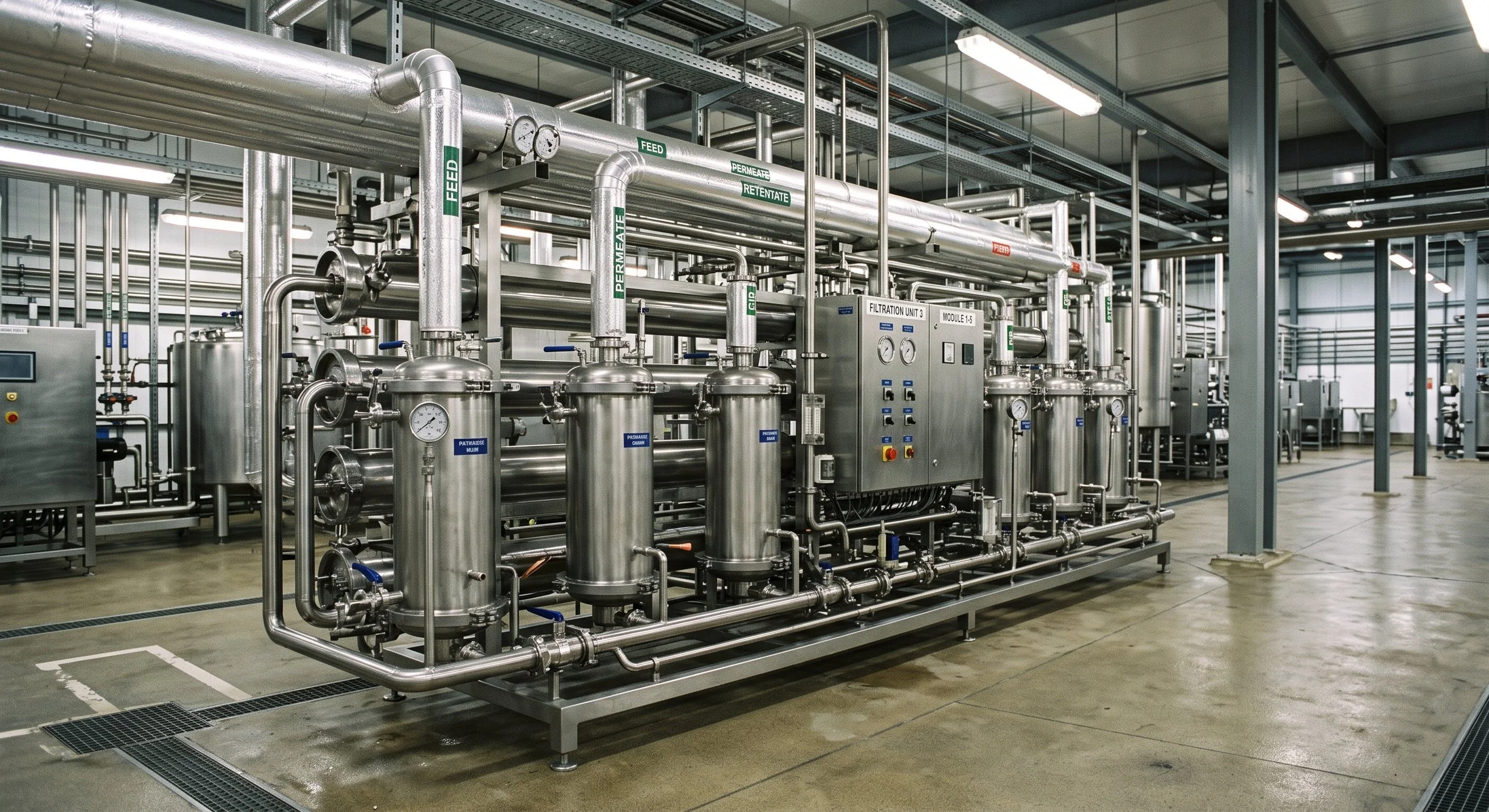
Ten thousand litres of milk go into a cheese vat. Rennet follows, the curd knits and is cut, and when the vat drains, somewhere between eight and nine thousand litres leave as whey: thin, greenish, around 94 percent water. For most of the history of cheesemaking this was the part nobody wanted. It went to the drain or onto fields, and in a good many jurisdictions it was a discharge permit and a cost line.
In the last week of August 2026, whey protein concentrate at 80 percent protein traded in Europe at €25,995 a tonne. The same specification was €11,700 a year earlier.
The reflex is to buy forward, take more volume, and find a second origin.
SIXTEEN TONNES OF CHEESE
Whey leaving the vat is about six percent dry matter and roughly 0.6 percent true protein. Everything else is water, lactose and minerals. To make a tonne of WPC80 powder, which is around 81 percent protein, you need about 810 kilograms of protein, and to collect 810 kilograms of protein at 0.6 percent you have to push something like 135 tonnes of liquid whey across ultrafiltration membranes. That assumes every gram makes it through, which it does not.
Those 135 tonnes of whey came off roughly 160 tonnes of milk. The same 160 tonnes of milk left about 16 tonnes of cheese sitting in the other half of the vat.
So the buyer who wants another thousand tonnes of protein powder next year is, without meaning to, asking the European dairy industry to find customers for another sixteen thousand tonnes of cheese. Curd and whey are the same decision. As one market report put it in September, adding whey capacity means thinking through the downstream cheese output that comes with it, which makes it a package deal rather than a single-ingredient choice.
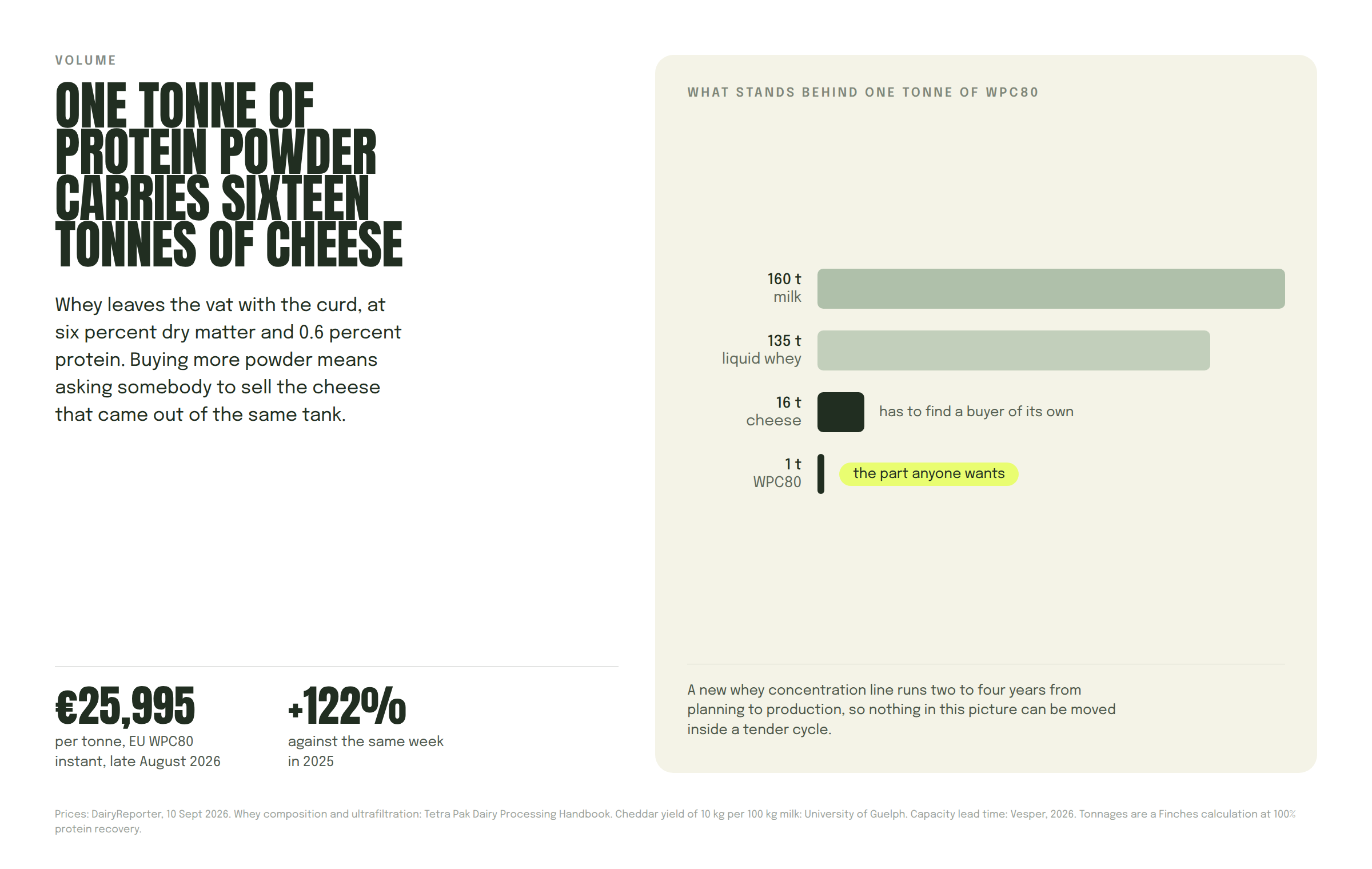
The liquid itself is there. Cheese production has been growing, and the whey comes off it either way. What has not grown fast enough is the ultrafiltration and spray-drying capacity that turns a 99.4 percent non-protein liquid into a powder, and a new whey concentration line runs two to four years from planning to production.
Two to four years is the response time of the entire system. Nothing a buyer does in a tender cycle shortens it, which leaves formulation and price as the only levers that move inside a year. By May 2026 some suppliers were reported sold out for the remainder of the year, and Darcy Davenport, chief executive of BellRing Brands, which owns Premier Protein and Dymatize, told investors that most players were going to need to reevaluate their pricing. The reformulation work that follows runs towards soy and pea, towards lower protein claims on pack, and towards smaller pack sizes at the same shelf price.
FORTY GRAMS AN HOUR
The same shape shows up in a market with no vat and no membranes at all.
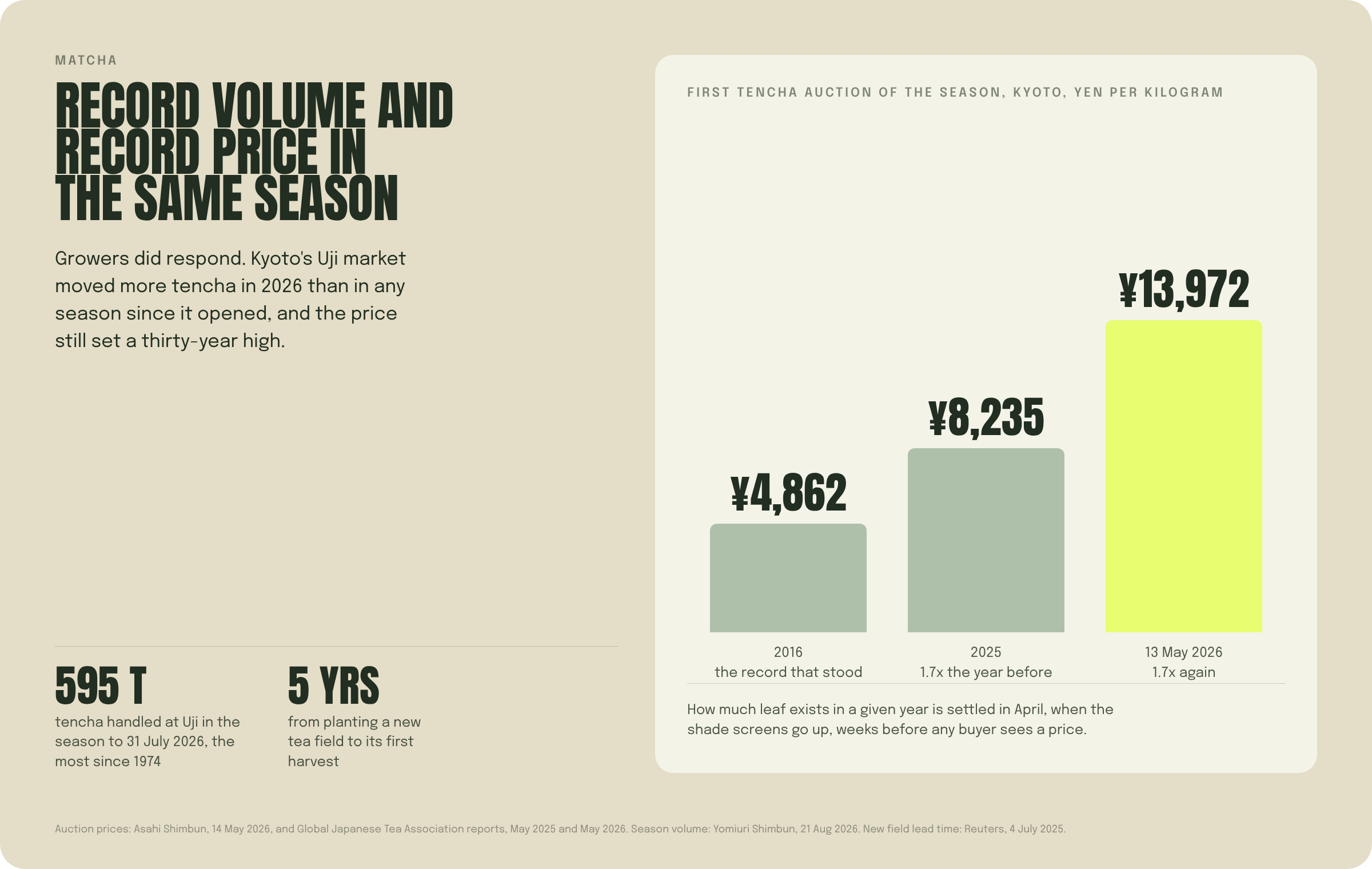
On 31 July 2026, the Uji tea market in Kyoto closed its season having handled 595 tonnes of tencha, the shaded leaf that is ground into matcha. That is the largest volume since the market opened in 1974. Machine-harvested tencha averaged ¥17,250 a kilogram, the highest since 1996.
Record volume and record price in the same season.
The reason sits in a calendar that has not changed much. In the middle of April, when the new leaves are about to sprout, growers cover the bushes with reed screens that cut out more than half the sunlight. Ten days later they spread straw over the reeds to cut out more. The leaf is picked from early to mid May, once a year, and only the spring flush is good enough to become matcha. Everything about how much tencha will exist in a given year is therefore settled by the end of April, before a single buyer has seen a price.
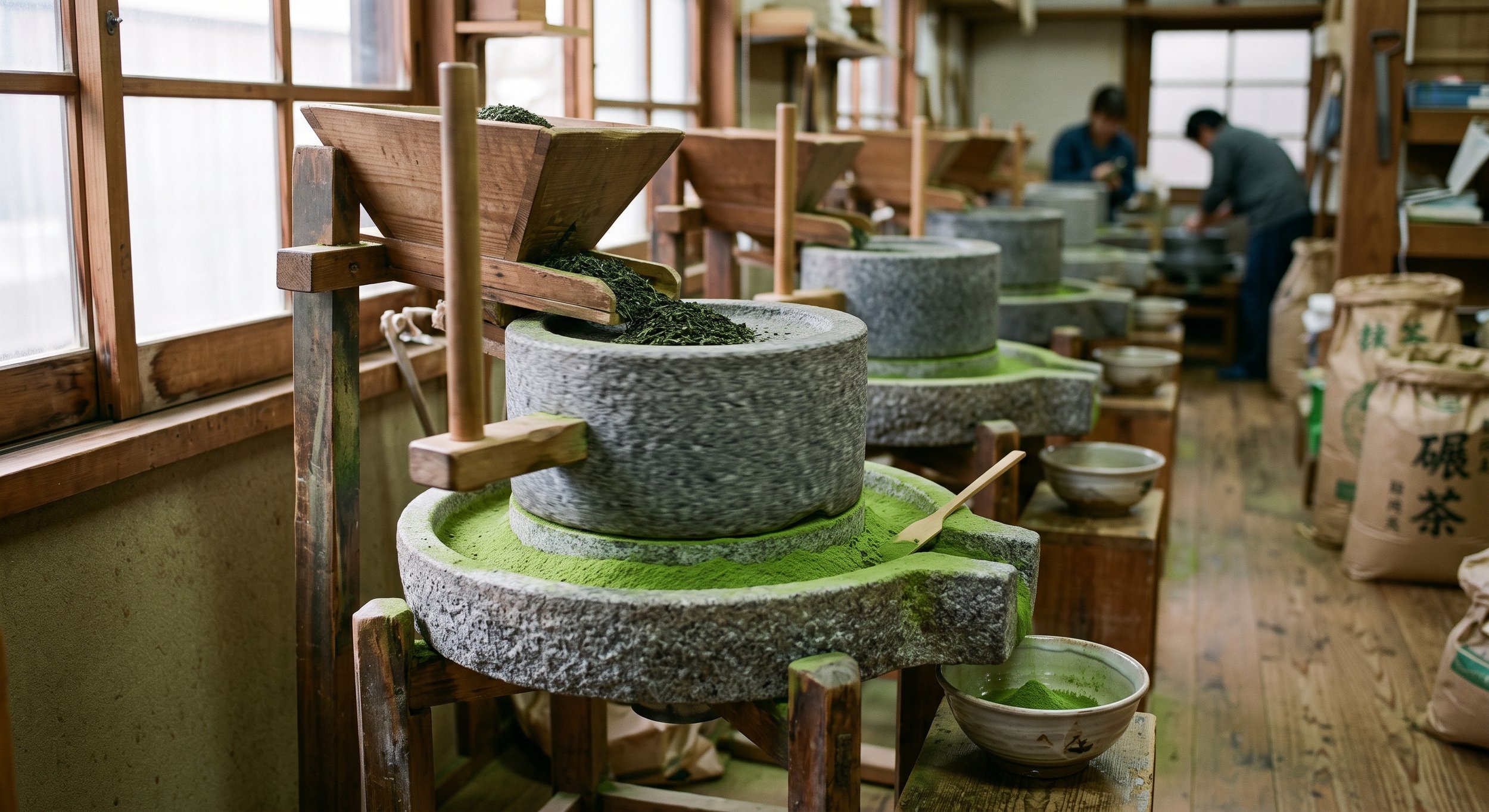
Then there is the mill. Tencha becomes matcha under a granite stone mill turning at about 30 revolutions a minute, producing roughly 40 grams of powder an hour. Turn it faster and the friction heats the leaf, the powder oxidises and comes out too coarse to whisk properly.
Supply has been losing ground at the same time. A sixth-generation grower interviewed by Reuters in July 2025 had watched his own harvest fall by a quarter, from two tonnes to one and a half, after a summer hot enough to damage the bushes themselves. Heat stress in one season shows up in the next season's flush, and the flush is the only one there is.
Kyoto's first tencha auction of 2025 averaged ¥8,235 a kilogram, about 1.7 times the previous year and comfortably past the old record of ¥4,862 set in 2016. On 13 May 2026, the first auction of the new season averaged ¥13,972, roughly 1.7 times again. Two consecutive years of the same multiple, against a supply base where a newly planted tea field takes five years to reach its first harvest.
WHAT APRIL DECIDES
Growers are not ignoring any of this. In Koka City in Shiga Prefecture, tencha cultivation rose by around 70 percent in a single first-harvest season, as producers converted sencha fields to the shaded cultivation that matcha requires.
That conversion was visible in April, in the physical fact of screens going up over fields that had none the year before. It became visible to the rest of the world in May, at an auction, expressed as a price. A procurement team reading the market read the answer about four weeks after it had already been decided in the field, and about a year after the planting decisions that made the conversion possible.
This is the pattern Finches was built around. The earliest readable signal in an agricultural market is almost always physical, local and unglamorous: acreage converted, screens raised, a lab result, an agronomist's note after a farm visit. It exists for weeks or seasons before it surfaces as a price or a supplier email, and it is normally sitting in a language, a photograph or a person's head rather than in a system. Standing somewhere that signal can be read is an infrastructure question, and it gets answered long before the season it matters in.
None of the tencha signals are secret. Cooperatives record conversions before the season starts, nurseries know what the five-year picture looks like, and the screens themselves are visible to anyone standing in the right field in the right week. They are also in Japanese, spread across prefectures, and aggregated nowhere a European buyer would think to look, which is why the first time most of them meet the 2026 crop is as a number at an auction in Kyoto.
TEN MONTHS, AND FIVE YEARS
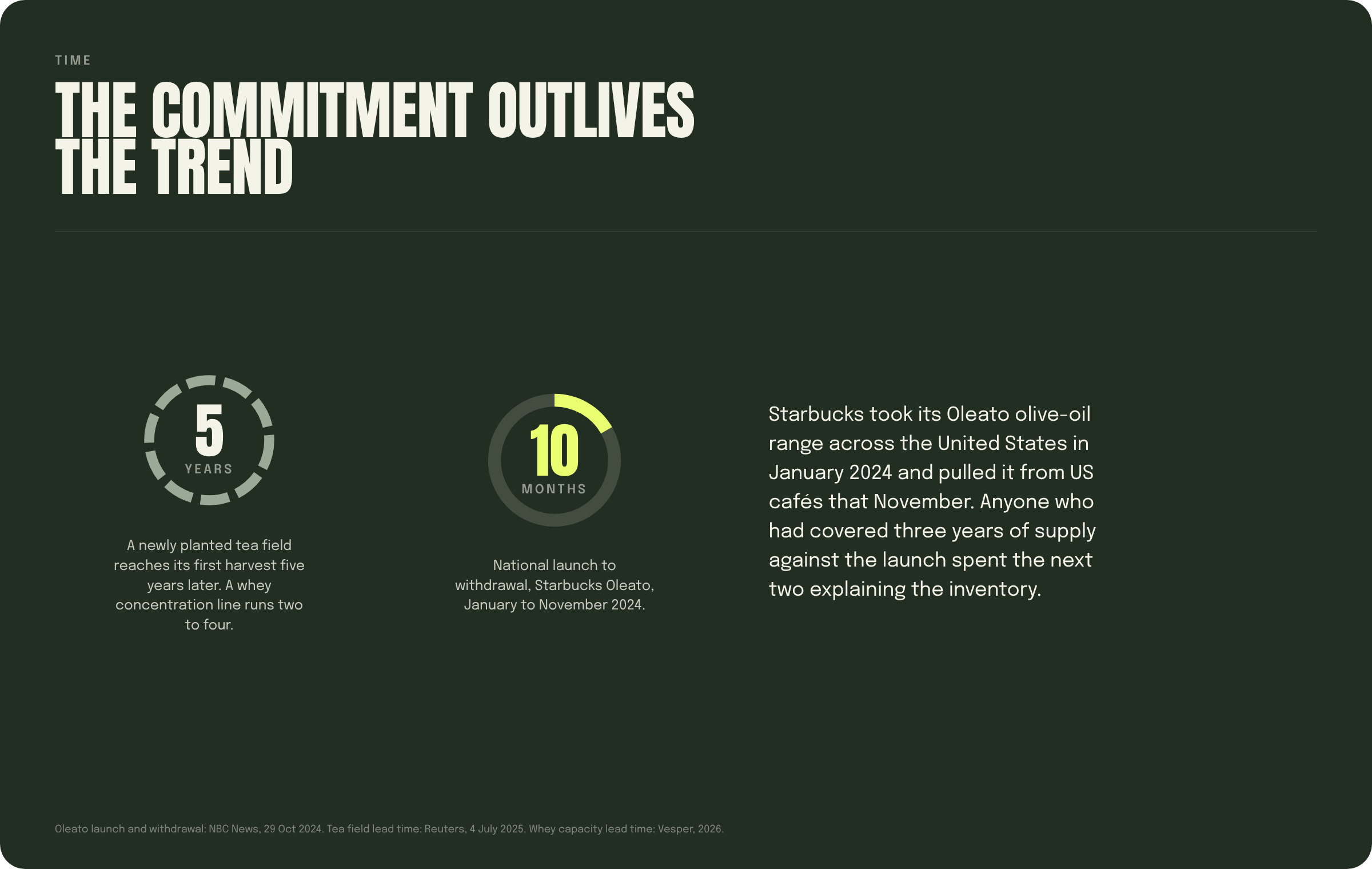
Starbucks rolled its Oleato olive-oil coffee range out across the United States in January 2024 and pulled it from US cafés in early November of the same year. Ten months, start to finish. Anyone who had locked in three years of supply against that launch would have spent 2025 and 2026 explaining the inventory.
Set against that: 11 percent of American adults told Gallup in mid-2026 that they were currently using a GLP-1 drug, up from 8 percent a year earlier and 3 percent in 2024. A population eating meaningfully less while needing to protect lean mass changes the shape of demand for protein, and that change will still be there when a membrane line commissioned today is finally running.
Both of those arrive in a procurement inbox looking identical. Both present as demand rising faster than anyone planned for. One of them is worth committing five years of volume against and one of them is worth waiting out, and the cost of confusing them runs in opposite directions: a buyer who covers a fad carries written-down stock, and a buyer who waits out a level shift pays the top of the market for years.
The clocks are what make the mistake expensive. A whey line takes two to four years. A tea field takes five. A pistachio tree planted this winter gives a small crop at five or six years and does not reach full bearing until it is ten or twelve. None of those decisions can be revisited when the trend data comes in.
The screens for the 2027 harvest go up in Kyoto Prefecture in the middle of April, and the only buyers who will know it in April are the ones who built somewhere to see it from.
Notes on facts and sources
Whey prices. WPC80 instant in the EU at €25,995/t in late August 2026, against €11,700/t in late August 2025 (+122%); US WPC80 instant at $12.25/lb on 31 August 2026 against $5.25/lb a year earlier (+134%). Quote on whey capacity being "a package deal rather than a single-ingredient choice" from the same article. DairyReporter, "US and Europe vie for premium whey as demand climbs", 10 September 2026. https://www.dairyreporter.com/Article/2026/09/10/us-and-europe-vie-for-premium-whey-as-demand-climbs/
Whey processing capacity. New whey concentration capacity takes two to four years from planning to production; the constraint identified as ultrafiltration capacity rather than liquid whey volume. Vesper, "WPC80 in 2026: why US buyers can't find product at any price", published 2026; and Vesper, 29 January 2026, on WPC80 reaching €14,320/t in the EU. https://vespertool.com/blog/wpc80-in-2026-why-us-buyers-cant-find-product-at-any-price
Whey composition and the vat arithmetic. Whey comprises 80 to 90 percent of the total volume of milk entering the cheese process; cheese whey is approximately 6.0 percent dry matter and approximately 0.60 percent true protein; WPC80 is approximately 81 percent crude protein in the finished powder. Tetra Pak Dairy Processing Handbook, "Milk and whey fractionation". https://dairyprocessinghandbook.tetrapak.com/chapter/milk-and-whey-fractionation . Cheddar yield of 10 kg cheese per 100 kg milk: University of Guelph, Cheese Making Technology e-book, Table 11.1. https://books.lib.uoguelph.ca/cheesemakingtechnologyebook/chapter/3-3-standardization-of-milk-for-cheese-making/ . The figures of roughly 135 tonnes of liquid whey, 160 tonnes of milk and 16 tonnes of cheese per tonne of WPC80 are our own calculation from those published values, at 100 percent protein recovery and 85 percent whey-to-milk volume. Actual recovery is lower, so the real milk requirement is higher.
Uji tea market 2026. 595 tonnes of tencha handled, the highest since the market opened in 1974; machine-harvested tencha averaging ¥17,250/kg, the highest since 1996. Yomiuri Shimbun, 21 August 2026, reported in the Global Japanese Tea Association Japanese Tea Report, August 2026. https://gjtea.org/japanese-tea-report-august-2026/
Kyoto tencha auctions. First auction of 2025 averaging ¥8,235/kg, roughly 1.7 times the previous year's average, against the previous record of ¥4,862/kg set in 2016; first auction of 2026 on 13 May averaging ¥13,972/kg, roughly 1.7 times the 2025 figure, across 375 lots totalling about 25 tonnes. Tencha cultivation in Koka City, Shiga Prefecture, up around 70 percent in one first-harvest season. Asahi Shimbun, 14 May 2026, and Global Japanese Tea Association Japanese Tea Reports, May 2025 and May 2026. https://gjtea.org/japanese-tea-report-may-2026/ and https://gjtea.org/japanese-tea-report-may-2025/
Tencha cultivation. Reed screens applied in mid-April to shut out more than 50 percent of sunlight, straw added ten days later; harvest from early to mid May, once a year. Marukyu Koyamaen, "About Matcha". https://www.marukyu-koyamaen.co.jp/english/about-tea/know-matcha.html
Stone milling. Approximately 40 grams of matcha per hour; about 30 revolutions per minute; excessive speed generates heat that oxidises the leaf and produces powder too coarse for whisking. Mizuba Tea Co., "The Ishi Usu", and Nakamura Tokichi Honten, "Stone-milled vs. machine-milled matcha". https://mizubatea.com/blogs/news-1/the-ishi-usu-what-using-a-stone-matcha-mill-is-all-about and https://global.tokichi.jp/blogs/life-with-tea/matcha-processing-difference
Time to first harvest for new tea fields. Five years. Reuters, "Japan's heat-stressed matcha tea output struggles to meet soaring global demand", 4 July 2025 (accessed via syndication). https://malaymail.com/news/life/2025/07/04/japans-heat-stressed-matcha-tea-output-struggles-to-meet-soaring-global-demand/182777
Short-run responses in the protein market. Standard whey powder prices up more than 50 percent since January 2026; WPC80 spot prices above $11/lb and WPI in the $12s per USDA; some suppliers reported sold out for the remainder of 2026; Darcy Davenport, CEO of BellRing Brands, on most players needing to reevaluate pricing. Food Dive, "Protein powder shortage threatens America's biggest food craze", 7 May 2026. https://www.fooddive.com/news/protein-powder-shortage-whey-prices/819625/
Heat damage to tea bushes. A sixth-generation grower's harvest falling from two tonnes to one and a half, roughly 25 percent, attributed to the previous summer's heat damaging the bushes. Reuters, 4 July 2025, as above.
Oleato. National US rollout January 2024; discontinued in US cafés in early November 2024. NBC News, 29 October 2024. https://www.nbcnews.com/business/consumer/starbucks-discontinue-oleato-olive-oil-coffee-drinks-us-rcna178031
GLP-1 usage. 11 percent of US adults currently using a GLP-1 drug, from a web survey of 5,065 US adults conducted 28 May to 5 June 2026, margin of sampling error ±1.5 percentage points; 8 percent in 2025 and 3 percent in 2024. Gallup, "In U.S., GLP-1 Usage Reaches New High". https://news.gallup.com/poll/712157/glp-usage-reaches-new-high.aspx
Pistachio bearing. A small crop at five to six years, full bearing at ten to twelve years. University of California Agriculture and Natural Resources, California Pistachio Research, "Climate & Cultivars". https://ucanr.edu/site/california-pistachio-research/climate-cultivars
