
The same rain doesn’t grow the same crop anymore. So we raised €2M.
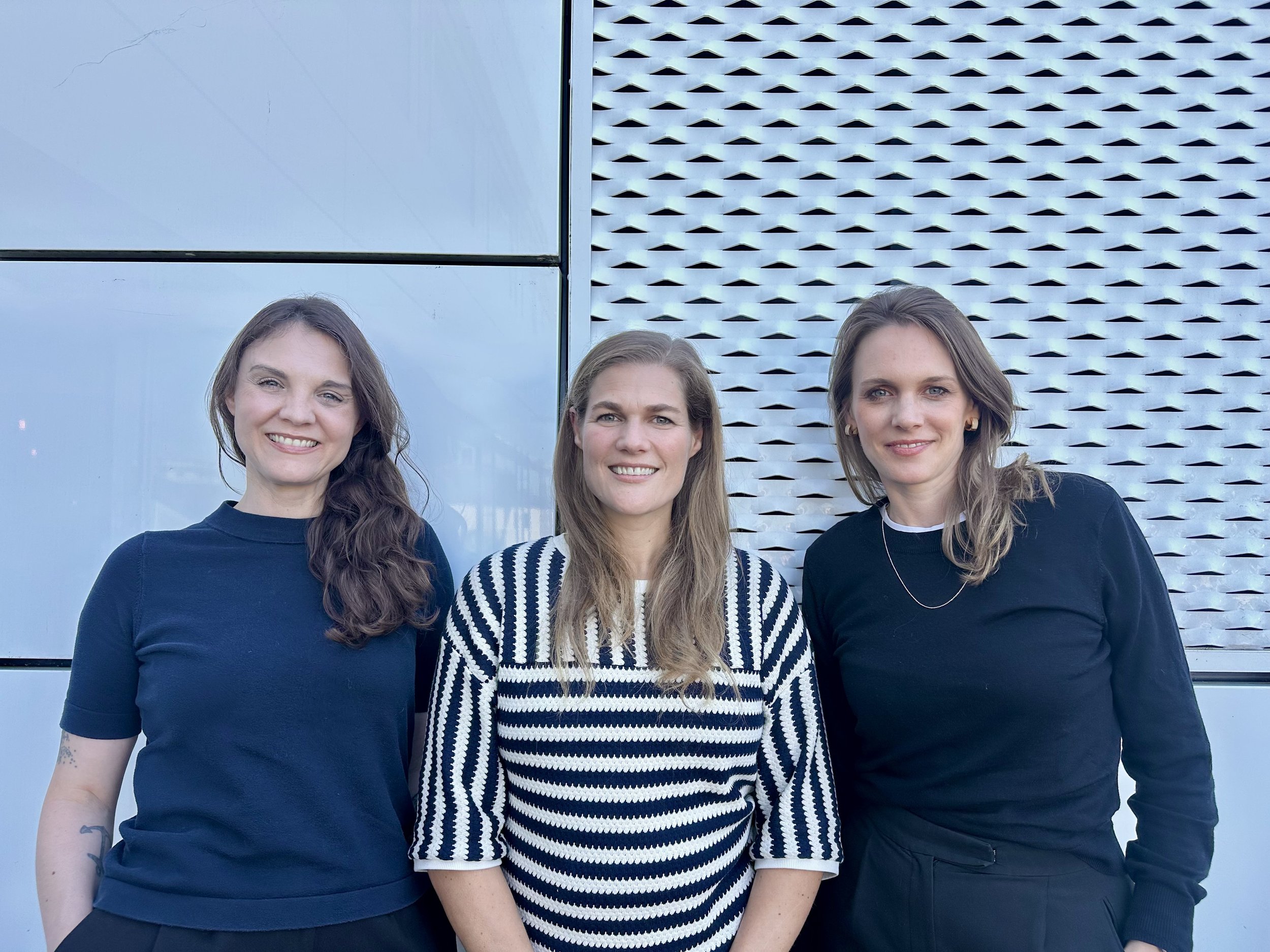
The Finches Founders Steffi, Catharina and Alex
Finches has raised €2 million in pre-seed funding, led by High-Tech Gründerfonds with Vanagon Ventures as co-lead. Here is what this summer showed us about how late sourcing teams hear about trouble in the field, and what we'll do with the money.
Today we're announcing our pre-seed round: €2 million, led by High-Tech Gründerfonds (HTGF), with Vanagon Ventures as co-lead. Bayern Kapital joins as a new investor, and UnternehmerTUM Funding for Innovators and our angels from the food industry and tech invested again. For the three of us, this is a big day, and we're proud of who is in this round.
Finches began with a drought. In Catharina's first year on her family's farm in Uruguay, the country went through its worst drought in decades, and her neighbors lost their livelihoods. We closed this round at the end of a summer in which Europe went through a drought of its own.
Back to Spain
In the last week of July, Nationwide Produce, a British fresh produce grower and importer based in Southport, did something its chair, Tim O'Malley, called very unusual. It went back to Spain for leafy greens and broccoli, at a time of year when those crops normally come out of British fields. Spanish growers, O'Malley told The Guardian, "have got hot weather but they are more used to farming in these conditions." David Simmons of Riviera Produce described the same scramble from his side of the market: "The UK is very short at the moment, so it's being imported from Spain and Holland to try to cover the orders."
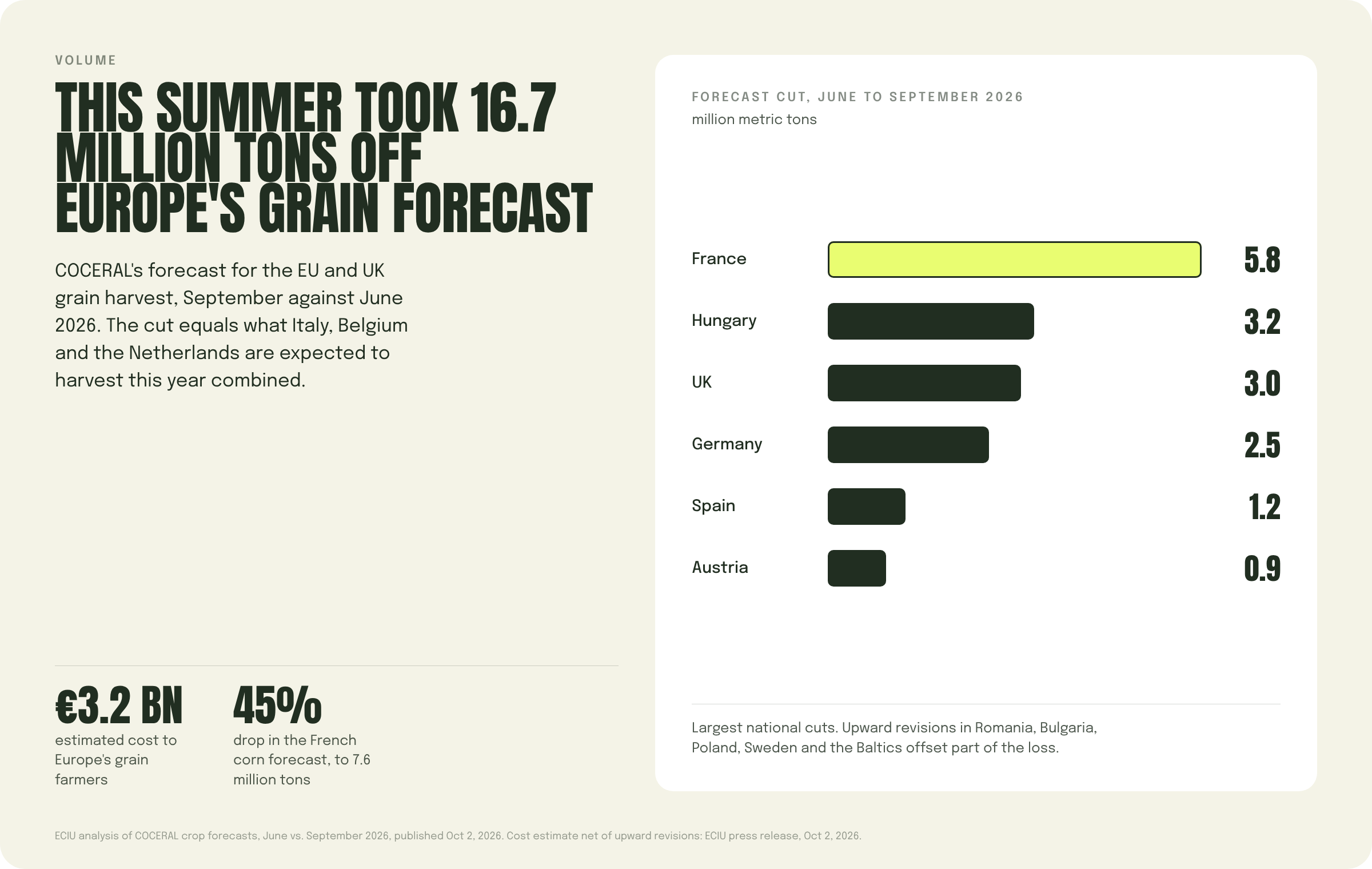
Broccoli was the part shoppers could see. The full scale only showed in October, in the grain numbers. Between June and September, COCERAL, the association of Europe's grain traders, cut its forecast for the EU and UK grain harvest by 16.7 million metric tons, according to an analysis the Energy & Climate Intelligence Unit (ECIU) published on October 2. That is as much grain as Italy, Belgium and the Netherlands are expected to harvest this year combined. France lost the most, 5.8 million tons, and its corn crop is now forecast at 7.6 million tons, down 45 percent. The ECIU puts the cost to Europe's grain farmers at about €3.2 billion.
Thirsty air
It's tempting to file all of this under a dry year, the kind farming has always lived with. The scientists at World Weather Attribution studied this spring and found something else. Their analysis of April to June, published on July 23, describes two forces working together: too little rain, and heat.
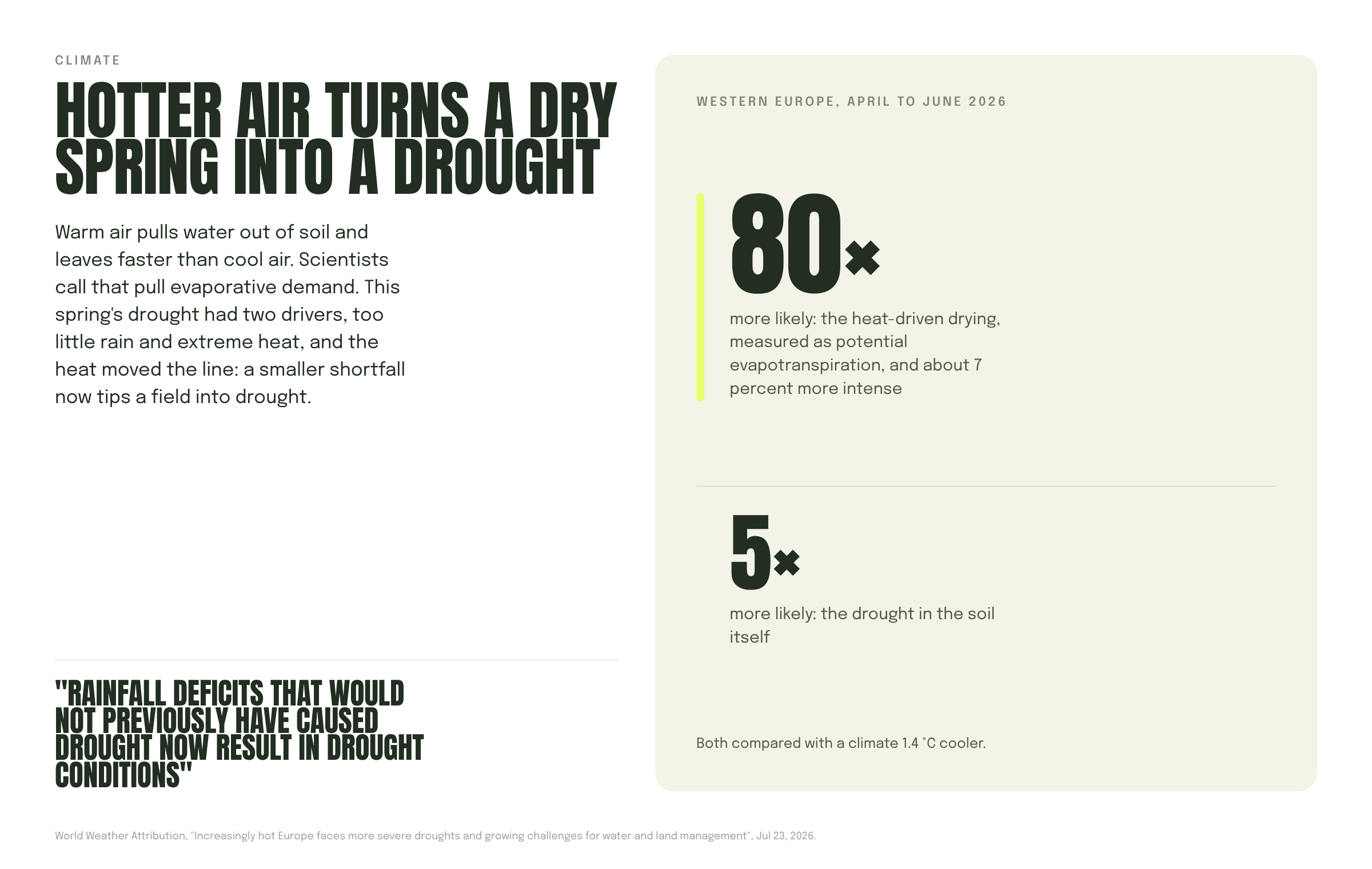
Warm air pulls water out of soil and leaves faster than cool air does. Scientists call that pull evaporative demand. In western Europe this spring, it reached levels that climate change had made about 80 times more likely than in a world 1.4 °C cooler. The drought in the soil itself became about five times more likely. The researchers put the consequence in a single sentence: rainfall deficits that would not previously have caused drought now result in drought conditions.
A dry spell that a field used to ride out now drains the soil. The same rain doesn't grow the same crop anymore.
For thousands of years, farming could lean on seasons that roughly repeated. Sourcing still does. A buying plan rests on contracts, supplier certificates, last season's yields and a ten-year average, and every one of them looks backward. They all assume that a given amount of rain brings a given harvest, and this spring showed how far that link has shifted.
Where the warning gets lost
What we see in companies that buy agricultural raw materials is that the warning usually exists and rarely travels. In most of them, sourcing risk lives in the ERP system and in spreadsheets, in phone calls and WhatsApp photos, and in whatever a few agronomists carry in their heads. Buyers call their suppliers about the biggest raw materials, and the long tail goes unwatched. The lab confirms a quality problem after harvest, when the production plan can no longer change.
Susanne Fromm, General Partner at Vanagon Ventures, described the same gap in her statement on the round: "Early bottleneck signals are actually visible months ahead of time; they're just trapped in disconnected weather data, field reports, lab results, and market data."
Closing that gap is what we do at Finches. We combine a company's own data, such as its supplier profiles, cultivated acreage and contracts, with what happens outside it: weather, satellite imagery, local news in the language of each growing region, crop science, and the reports agronomists bring back from farm visits. From those signals, Finches raises an early warning that names the affected regions, suppliers and supply chains, and recommends a next step. Finches Intelligence has been live since September 2026. Our early customers include a leading organic baby-food manufacturer and a North American Fortune 500 food group.
A few weeks of warning gives a buyer room to act, and the first conversation is with the growers. A buyer who sees a shortfall coming in June can sit down with the farms in June and decide together what to do: adjust the contracted volumes, move delivery dates, or work out how to protect the crop that is still in the field. For both sides, that is a far better conversation than a canceled delivery in September. Growers shouldn't have to carry climate risk on their own, and the relationships behind a sourcing region take years to build. The other options are the ones a buyer has always had, now with time to use them: line up a second supplier, buy earlier, or move a production run.
What the money is for
The round goes into the product and into sales.
On the product side, Finches puts what's happening in the world, from droughts and disease to labor shortages and trade conflicts, in the context of each customer's raw materials, origins and suppliers. Every alert says what the signal means for that company and what to do next. New in our Early Access Program, customers can bring in their own documents, such as specifications, standards, internal guidelines or supplier agreements, and Finches works with them as part of that context. Part of this round goes into what we build on top of that together with our early access partners: linking raw materials to recipes and finished products, checking origins against organic and other standards, and bringing production plans and costs into the picture.
On the sales side, we're bringing Finches to more companies that buy from agriculture: food and beverage manufacturers first, and pharma and cosmetics companies, which depend on crops as well. Anna Stetter, Investment Manager at HTGF, explained her fund's decision this way: "We were particularly impressed by how precisely the founding team understood the industry's pain point and how quickly they developed a technological solution to it."
To HTGF, Vanagon Ventures, Bayern Kapital, UnternehmerTUM and our angels: thank you for backing us. Finches builds sourcing intelligence for companies that buy agricultural raw materials.
Notes on facts and sources
The round and the customers. Investors, amount, use of funds, the launch of Finches Intelligence in September 2026, the two anonymized early customers, and the quotes from Susanne Fromm (Vanagon Ventures) and Anna Stetter (HTGF): Finches press release.
Back to Spain. Nationwide Produce going back to Spain for leafy greens and broccoli, the quotes from Tim O'Malley and David Simmons, and these crops normally being sourced in the UK from May through the summer: The Guardian, August 2, 2026, "'Worst we've known': UK turns to imports as drought and heat hit vegetable crops", syndicated by AOL; listing with standfirst at inkl. Nationwide Produce as a grower, importer and exporter of fresh produce based in Southport: FreshPlaza, October 3, 2023.
Grain. The 16.7 million metric ton cut in the EU and UK grain forecast between June and September 2026, based on COCERAL's crop forecasts; the comparison with the combined forecast harvest of Italy, Belgium and the Netherlands; the losses by country (France 5.8 million tons, Hungary 3.2, UK 3.0, Germany 2.5, Spain 1.2, Austria 0.9); and French corn down 45 percent to 7.6 million tons: ECIU, "Summer drought and heat impacts on European harvests", October 2, 2026. The estimated cost to farmers of €3.2 billion, net of upward revisions in Romania, Bulgaria, Poland and Sweden (€4.1 billion before them): ECIU press release, October 2, 2026. The ECIU's country analysis lists Hungary at 3.2 million tons, its press release at 3.1; we use the analysis.
Thirsty air. Attribution study of the European drought of April to June 2026, western and eastern Europe analyzed separately. For western Europe: conditions of high potential evapotranspiration about 80 times more likely, or about 7 percent more intense, and soil-moisture drought about 5 times more likely, compared with a climate 1.4 °C cooler. The sentence on rainfall deficits is quoted from the study's key findings: World Weather Attribution, July 23, 2026.
Uruguay. Worst drought in decades, the most severe dry period since 1947, after three consecutive years of insufficient rainfall: DevelopmentAid, August 23, 2023.
