
Where Retail Supply Chains Start to Strain: Fresh, Time, and Upstream Risk
Late at night, a sourcing manager receives an update from a grower as the harvest comes in: disease pressure has reduced usable yield, quality is uneven across fields, and only part of the contracted volume can be delivered at the original specification, while the rest is available at a slightly lower grade if a decision is made quickly. On paper, the gap can be closed by blending lots, activating secondary growers, or accepting wider tolerances, but the downstream assumptions were built on a healthy crop, stable yields, and precise cost targets that no longer hold. By morning, the system responds the way it always has under uncertainty, securing extra volume to protect service levels, over-ordering to hedge against further loss, and moving raw material into facilities that were never planned to handle that variability. Some of the harvest is re-sorted, some is downgraded, and some is discarded entirely, not because the disease was unforeseeable or the sourcing decision was wrong, but because the impact of compromised yield on cost, capacity, production efficiency, and waste was impossible to see clearly in the moment the decision had to be made.
Retail supply chains rarely fail all at once, they wear down through accumulation. Repeated stress, sustained volume, and small misalignments compound over time. Most breakdowns look like normal operations until their effects are tallied: higher waste, added penalties, emergency freight, strained store relationships, missed OTIF targets, and supplier partnerships that quietly weaken.
Crops, biology, and shelf life do not reliably conform to forecasts. Across large manufacturers and processors, the same structural pressure point appears again and again. Retail supply chains struggle where freshness constraints, private-label economics, fragmented information, and field conditions converge. That pressure point is widening.
Let’s break it down.
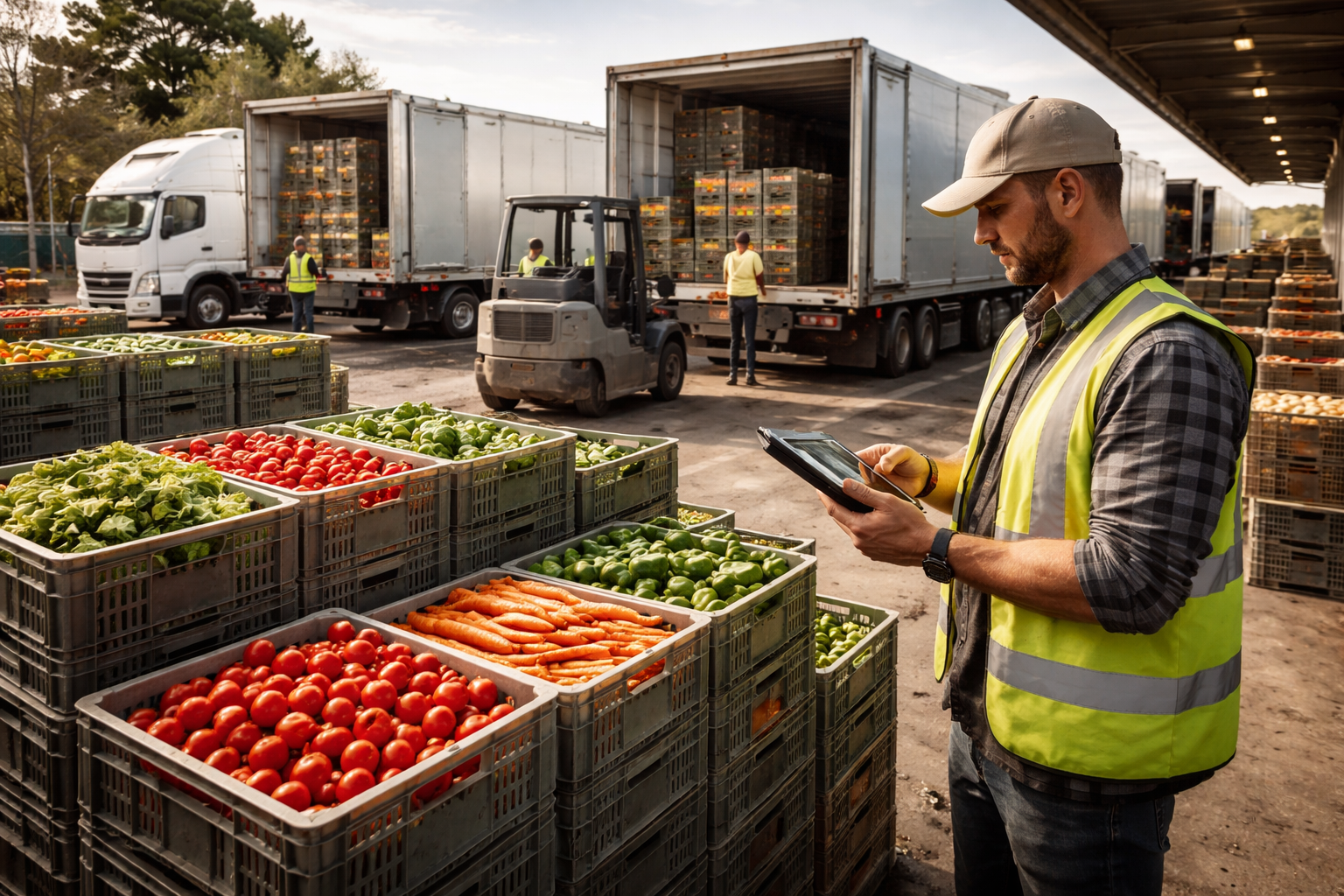
Fresh isn’t an inventory problem. It’s a latency problem.
Availability is often treated as a core measure of retail excellence, associated with full shelves, strong service levels, and minimal gaps. In fresh categories, however, availability is inseparable from time, because every additional hour in the system directly erodes usable value.
Every hour between harvest or production and the moment a product is scanned at checkout reduces its usable value, a loss that is physical and unavoidable rather than theoretical. It does not show up cleanly in planning or inventory systems, but instead appears later as higher shrink, quality complaints, rework, rejected loads, and additional volume produced as a precaution.
In the US for example, data from the USDA’s Economic Research Service shows that losses at the retail level in fresh categories are significant, with fresh vegetables accounting for a large share. In parallel, the UNEP Food Waste Index puts hard numbers on waste at retail and downstream. Retail is a smaller slice than households, but it is the slice with the most paperwork and the most blame.
This is where incentives start to matter.
Stock availability is managed with high visibility across stores and regions. Waste is typically handled through internal shrink and margin mechanisms. Suppliers operate between these two priorities, often absorbing the operational consequences of both.
Here is the first reframe: Fresh availability is mostly a lead time design problem disguised as a forecasting problem.
Forecasting matters, but the more powerful lever is latency. How quickly the network can convert real demand signals into real replenishment without stuffing buffers everywhere. When planning cycles, product shelf life, and promotional timing are not aligned, even well-run supply chains struggle to deliver consistent results.
Improvements in out-of-stock performance are clearly positive for shoppers and for store teams. Supporting that level of availability, however, often requires absorbing more variability earlier in the supply chain, especially in short-life categories. That variability does not disappear. It shifts upstream.
Service level targets play an important role in protecting the shelf, but they also tend to favor earlier volume commitments as a form of risk management. In fresh categories, earlier volume can feel safer operationally, even when it increases exposure to timing and shelf-life constraints later on. Managing that trade-off is less about intent and more about how the system is designed to respond under pressure.
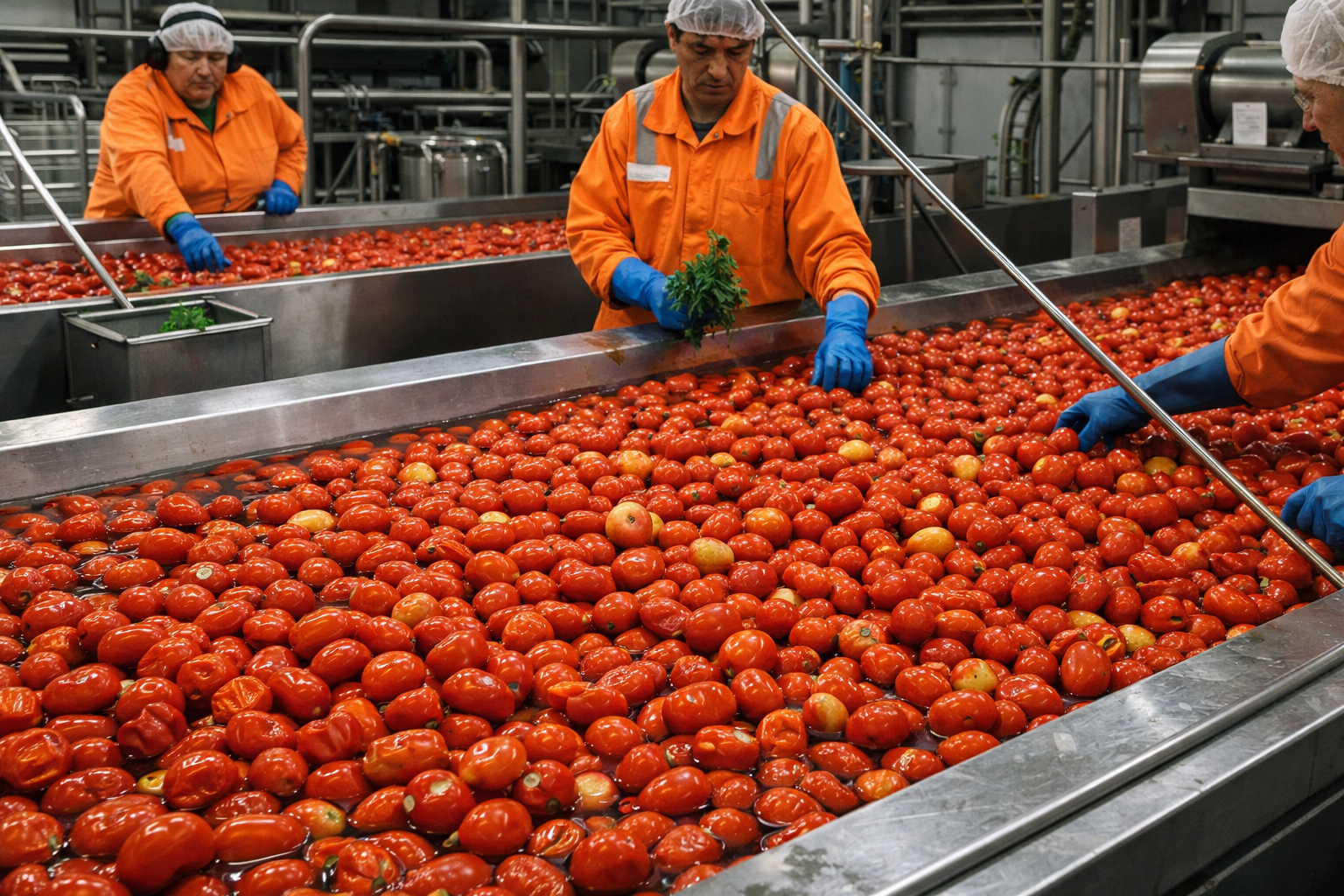
Private label changed the operating model. The risk model is still adjusting.
Private label no longer means basic packaging and “good enough.” That era is over. Retailers now push private labels as differentiated brands, not cheap substitutes. McKinsey’s grocery research in Europe shows private labels gaining share and being positioned more strategically. NIQ’s global data shows the same pattern across regions.
As retailers take on a stronger brand ownership role, the operating model naturally evolves. More decisions around specification, quality, and positioning move closer to retail, while execution continues to rely heavily on manufacturing partners. This redistribution of responsibility changes how risk shows up across the supply chain.
Private label does not just change who is on the label - it changes the operating model.
Specifications tighten as ingredient origin, certifications, sensory targets, and packaging formats are locked more aggressively than for other brands, because the retailer’s reputation sits directly on the shelf. Promotional behavior shifts as well, with retailers deploying private label more freely since margins are engineered differently. At the same time, supplier substitutability increases as retailers seek optionality while manufacturers depend on stable lines, and those competing priorities tend to collide under time pressure.
Now add raw material volatility. The FAO Food Price Index tracks sharp month to month swings across commodity baskets. The World Bank has been explicit about ongoing risk in agricultural price dynamics and the structural drivers behind volatility. This is not abstract. They translate into formulation challenges, sourcing decisions, and procurement trade-offs in real time.
Here is the counterintuitive observation: Private label can make the system less adaptable to volatility, even though it is marketed as flexible value.
Value tier products have limited ability to absorb cost shocks, particularly when inputs such as cocoa, coffee, oils, dairy, or packaging spike, while premium brands can sometimes respond by taking price, adjusting pack size, or leaning on established loyalty. Private label typically does not have those options, as retailers prioritize price integrity and shelf consistency, a constraint that shifts pressure upstream into faster reformulation, accelerated supplier qualification, and quicker sourcing decisions, even as execution timelines on the ground remain unchanged.
This creates a persistent tension rather than a failure. Tight specifications, volatile inputs, and fixed promotional calendars place sustained pressure on the system.
When strain appears, it rarely does so dramatically and is more likely to surface as ongoing friction in day-to-day operations. It shows up through more expediting, more substitutions, shorted shipments, and temporary specification exceptions that gradually become normalized rather than treated as signals of a system under pressure.
The supplier transparency gap isn’t a data problem
Most large processors and retailers operate with a robust set of systems, including ERP for orders, WMS for inventory, dedicated QA platforms, transportation systems, and multiple layers of business intelligence. Even with all of this in place, the most current picture of supply often still travels through emails, screenshots, and forwarded messages rather than through a shared, real-time view of what is actually happening.
This is not a question of effort or discipline. ERP systems are designed to be systems of record. They capture what was planned and confirmedhey are less effective at reflecting what is happening in real time.
Supply conditions change continuously, shaped by a steady stream of small but consequential events across the network. A harvest may be delayed, a quality hold can pause a release, a line changeover might take longer than expected, a carrier can miss a pickup, a promotion may move forward, or a co-manufacturer can reach a temporary capacity limit, each adjustment subtly shifting assumptions that were only recently considered stable.
You cannot manage a living network with static snapshots.
This is why “visibility” keeps resurfacing in serious supply chain conversations. Not as a buzzword, but as a survival requirement. The World Economic Forum describes the current environment as persistent turbulence. Disruption is the baseline, not the exception.
When companies try to share data across partners, they often hit another wall in the absence of a shared language. This is precisely why GS1’s work on traceability and standardized identifiers exists, because without common standards, every conversation risks turning into an argument about whose numbers are right rather than what is actually happening.
Here is the second reframe: The core challenge is not access to more dashboards. It is clarity around decisions.
Dashboards tell you what happened. Accountability tells you who changed what, when, and why. It tells you whether the network could actually absorb that change. When a retailer alters an order quantity, do you see it as a decision with a blast radius, or do you just see a new number and scramble?
Retail supply chains break when decisions move faster than the network’s ability to validate them.
Many of the fastest decisions today happen through informal channels. That is often necessary and human, especially under time pressure. The risk is that without a clear trail, it becomes difficult to reconstruct how and why inventory moved the way it did weeks later, when financial and compliance conversations begin.

Agronomy sits closer to retail operations than most assume
It is easy to think of farming as something that happens “upstream,” outside the day-to-day concerns of retail operations. In practice, it functions as the first production step in the entire value chain. What happens in the field sets the boundaries for everything that follows.
Field reality shows up downstream as yield shortfalls, quality variance in brix, moisture, size, and defects, harvest timing shifts, disease and pest pressure, and regional weather events that reshape supply for weeks.
FAO has long emphasized early warning and monitoring systems for plant health and transboundary pests because timing is everything. Signals only matter if they align with operational decision windows.
Retail planning cycles, however, often assume that agricultural output behaves like a stable input. Increasingly, that assumption does not hold. Climate-driven variability is introducing more frequent and more localized swings in supply. Research linking extreme weather to food price spikes reinforces this shift. A growing share of volatility is shaped by meteorological conditions rather than geopolitical ones.
This creates a structural tension for large processors and retail partners alike. Commercial commitments are often finalized before agronomic outcomes are fully known. When those two timelines diverge, teams compensate through operational effort, expedited decisions, and short-term fixes that protect the shelf but add hidden cost.
When agronomy is treated primarily as a periodic procurement consideration rather than an ongoing operational signal, issues tend to surface late. Often after promotional plans are set and shelf promises have already been made.
A practical takeaway: align the system with how it actually operates
Retail supply chains struggle when planning assumptions drift too far from operating reality.
Demand signals are partial.
Supply is conditional.
Time has hard limits.
Data reflects what was confirmed, not always what is unfolding.
Field conditions introduce variability that no plan can fully neutralize.
None of this is new. What is changing is the frequency and impact of these gaps.
The response is not more complexity for its own sake. It is tighter alignment between decisions, timing, and physical constraints. Precision about what is known right now matters more than theoretical optimization.
For manufacturers, processors, and retail partners, the most effective moves tend to be practical rather than transformational.
Design networks to respond faster, rather than relying on larger buffers. Excess inventory degrades quickly in short-life categories, while speed preserves optionality.
Treat private label as a full operating model, not just a pricing strategy. Products designed around value still require resilience when conditions shift.#
Make decision context as visible as outcomes. Knowing why a change was made, and when, reduces downstream rework far more than additional reporting layers.
Pull agronomy into operational cadence. Not because farming is “digital now,” but because surprises are expensive and increasingly predictable if you watch the right signals.
This does not require hype or grand rewrites, only fewer late-night surprises, fewer last-minute workarounds, and fewer good products failing to reach the shelf.
Sources
Food Availability (Per Capita) Data System - Food LossWorld squanders over 1 billion meals a day - UN report