
Why 2025’s potatoe Surplus Is as Dangerous as a Shortage
In September 2025, the North Western European Potato Growers (NEPG) stated that after acreage expansion in Belgium, Germany, France, and the Netherlands, they projected a record harvest. Not “more potatoes.” A record. And not “lower prices for everyone,” but a chain problem: price collapse for uncontracted volume, storage bottlenecks, and diversion into animal feed, biomethanisation, or compost because not everything could be stored. Surplus is often treated as the opposite of shortage. In practice, it is a similar kind of failure, just from the other side. The real risk is not scarcity or abundance. It is whiplash.
Why Agricultural Surplus Is Really a Race Against Time
When people outside operations talk about surplus, they talk about price. When people inside operations talk about surplus, they talk about time.
Potatoes are alive after harvest: They respire. They lose water. They heat up in a pile. That matters because industrial chains are not built for infinite patience. Storage is not a warehouse full of inert boxes. It is an expensive attempt to slow biology down.
The University of Idaho’s postharvest bulletins are explicit about what drives storage losses. The primary cause of weight loss in stored potatoes is water loss, mostly through transpiration and, to a lesser extent, respiration. That water loss reduces sellable weight, degrades appearance, and changes texture. The Food and Agriculture Organization (FAO) notes another piece that becomes brutally relevant in glut conditions: mechanical damage during harvest and handling increases susceptibility to microorganisms and rot during storage.
Now put those facts into a year when there is too much crop for the nodes available. A surplus does three things at once:
It compresses decision windows: You have less time to cure, grade, and place lots into the right storage conditions because everything is arriving now.
It increases rough handling: In a calm season, you can be precious about bruise risk. In an overflowing season, speed wins and quality pays.
It eats your optionality: Once a lot is diverted to feed, biogas, or compost, you are not “temporarily reallocating.” You are burning value so the chain can keep moving.
This is the first reframing that matters for 2025. NEPG’s September 5, 2025 press release reads like a warning label: hectares expanded, record harvest expected, and a significant share of the crop not likely to be stored, with tens of thousands of tonnes already redirected to lower value outlets.
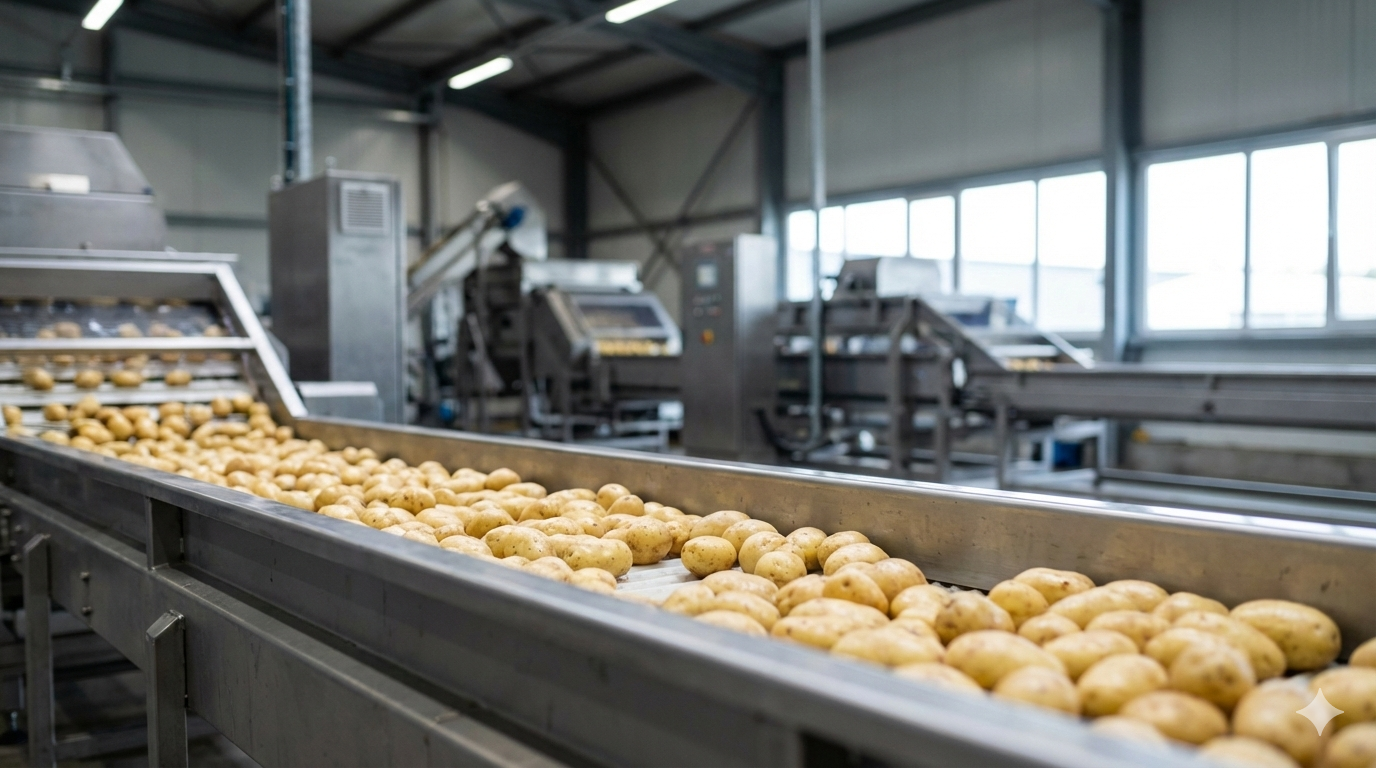
2025’s Potato Goldilocks Problem
The "Goldilocks Problem" describes the challenge of finding a "just right" balance, avoiding extremes (too much or too little) in various fields like product design, AI, research, and international strategy – mirroring Goldilocks' preference for porridge that isn't too hot or cold, but perfect.
The uncomfortable truth: processors helped write the surplus into existence
Acreage expansion is usually described as a rational response to market signals. That is true, as far as it goes. What it leaves out is where those signals came from. Planting decisions followed the incentives created by processing capacity, contract pricing, and demand forecasts. The shock came later, when the system discovered it had incentivized more volume than it could absorb.
NEPG ties the 2025 expansion to consecutive seasons of demand narratives from processors, increases in processing capacity, and higher contract prices, plus the simple competitiveness of potatoes versus alternatives. Those signals were not imaginary. Europe is physically expanding processing capacity and operating plants at high utilization.
On the trade and industrial side, the European Potato Processors’ Association (EUPPA) describes a sector at scale, with 51 production facilities and member representation accounting for more than 90 percent of Europe’s processed potato production by value and volume.
Here is the second reframing: Contracting does more than manage risk; it shapes how much gets planted. A contract price not only secures supply, it changes the local economics of rotation, storage investment, and rental bids. It also creates a halo. Even if a processor contracts most of its volume, a broader ecosystem often expands speculative hectares around that contracted core, because everyone sees the same growth story and wants in.
Then the difficult part arrives: In surplus conditions, the market does not correct evenly. Uncontracted volume takes the hit first, protecting contracted flows at the cost of extreme price volatility. NEPG’s language points directly at that issue.
In a saturated system, surplus often degrades plant performance instead of improving it. Because excess crop does not arrive as uniform, perfect potatoes. It arrives as variability. Mixed lots, stressed tubers, higher damage rates, and more quality drift in storage.
Meanwhile, finished goods do not “magically” find homes. Reporting on Belgium’s fries industry captures the tension: global demand is real, but the industrial expansion has a cost profile, workforce pressure, and environmental constraints that do not go away just because raw potatoes are plentiful.
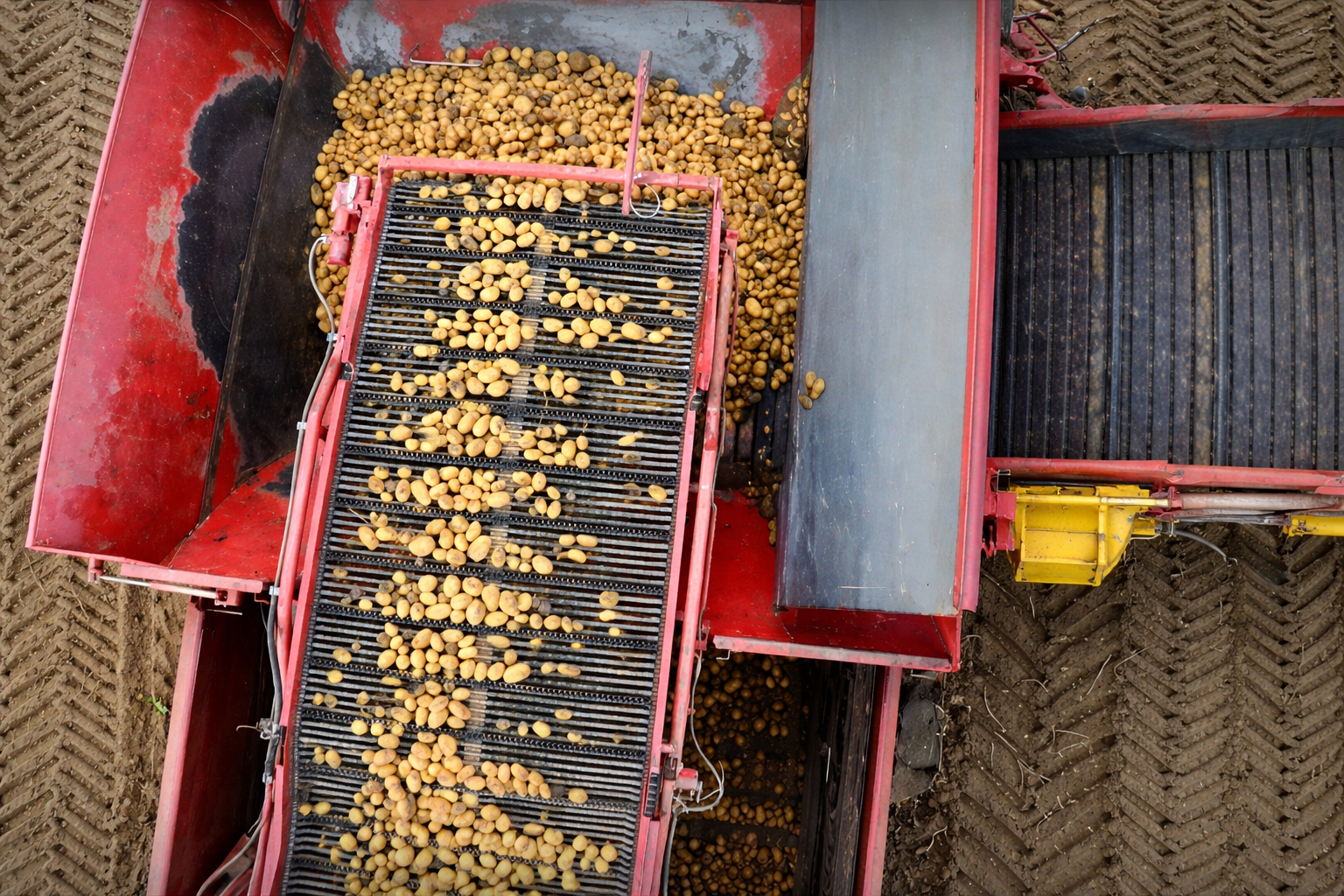
The Mirror Image — Shortages Unfold Differently
In a shortage, there are fewer trucks at the gate. You scramble for cover, pay up for volume, and push quality tolerances because you are trying to keep lines running. That is the obvious failure mode. The less obvious one is incentive made scarcity, the kind that looks irrational until you track how money and policy move a staple crop.
Belarus in 2025 is a case study in how a potato shortage can be engineered. Le Monde reported public discontent as potatoes became scarce and expensive, with experts tying the scarcity to state set prices that made domestic sales unprofitable and encouraged producers to export to Russia where prices were higher.
This matters for manufacturers because it is the other half of the volatility trap. You can spend years optimizing for raw material cost and plant utilization, and still get kneecapped by a policy distortion two borders away.
So yes, 2025 is a surplus story in parts of Europe. But the broader lesson is not “more potatoes is bad.” It is that the system is built to amplify swings. Surplus breaks the chain by overwhelming physical capacity. Shortage breaks it by forcing bad substitutions and frantic sourcing. Both hurt operations.
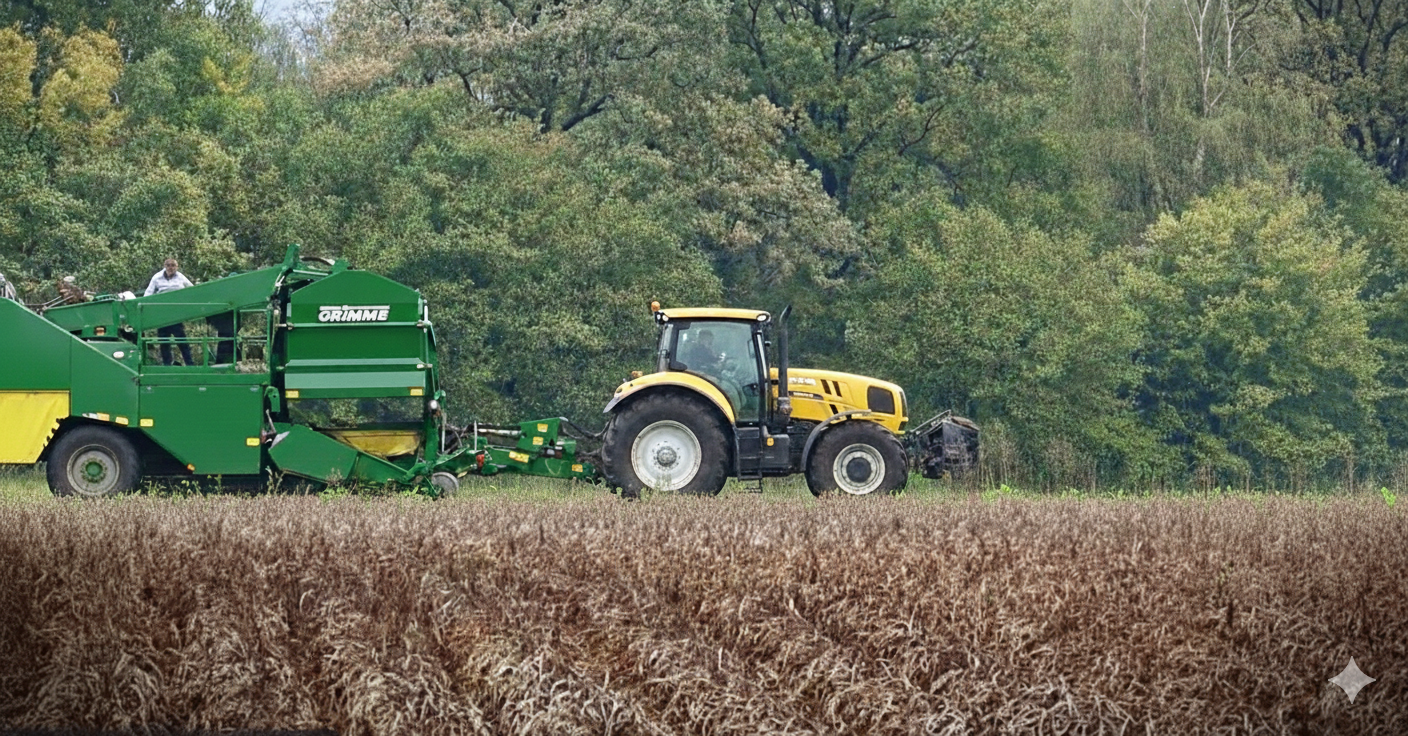
The real risk is whiplash, and the fix is earlier signals and tighter alignment
The NEPG press release is not only about 2025. It contains an implicit warning about 2026. After economic losses, NEPG expects a significant reduction in planted area next year and raises the possibility that a supply crisis could turn into a demand crisis if growers lose the economic capacity to keep up.
This is the whiplash mechanism. A glut damages growers. Damaged growers pull back. The pullback sets up a short crop and a tighter raw material market. The chain then pays more for stability it could have protected earlier.
McKinsey’s survey of executives on supply chain planning IT is revealing: 60 percent of implementations take more time or money than expected or fail to achieve anticipated outcomes, and the piece calls out leaders clinging to manual systems and antiquated software. Many agricultural manufacturing chains still discover reality too late because the signals are scattered across spreadsheets, siloed quality systems, contract files, and someone’s head.
What does better alignment look like in potato operations, specifically?
Treat storage as a constraint, not a buffer.
Model it like a production unit with failure modes, not like an empty box. FAO’s postharvest work emphasizes how storage losses depend on tuber condition, mechanical damage, and storage conditions. If you cannot see storage capacity, lot condition, and time in store as a unified picture, you are planning blind.
Track uncontracted exposure like it is operational risk.
In surplus years, the free buy pool becomes the crash zone. If your chain relies on it as an invisible cushion, you are outsourcing volatility to the weakest link and then be surprised when acreage swings.
Pull field and intake signals into commercial decisions earlier.
Trial digs, early yield estimates, quality trends at intake, and storage energy constraints are not agronomy trivia. They are leading indicators of whether your winter production will be stable or a constant spec firefight. NEPG explicitly points to early plantings, hectare expansion, and early reference sampling as reasons they could see the record crop coming.
Demand is not “one” number.
A processor serves channels with different elasticity and different tolerance for inventory. When export markets soften, finished goods do not just “sell later.” They block cold stores and steal flexibility from the next run plan.
Move from hindsight spreadsheets to live coordination
Agri-food risk research highlights how volatility propagates through planning and cost structures. Modern operations need:
dashboards that unify acreage/yield signals with capacity and contracts
exception alerts (“Week 38 storage collision risk”)
scenario planning (“What if export pull is 15% lower?”)
partner-facing visibility so decisions don’t happen in silos
If 2025 taught the sector anything, it should be this: abundance does not guarantee stability. Without earlier signals and tighter alignment, a record crop is just another way to break the chain.
