
Global Orange Juice Shortage: How Brazil & Florida’s Supply Chain Collapse Is Driving Prices Up
Global orange juice prices are hitting record highs as extreme weather and citrus disease disrupt production in Brazil and Florida. This article breaks down the orange juice supply chain crisis, why shortages are happening, and how climate change is reshaping the global breakfast economy.
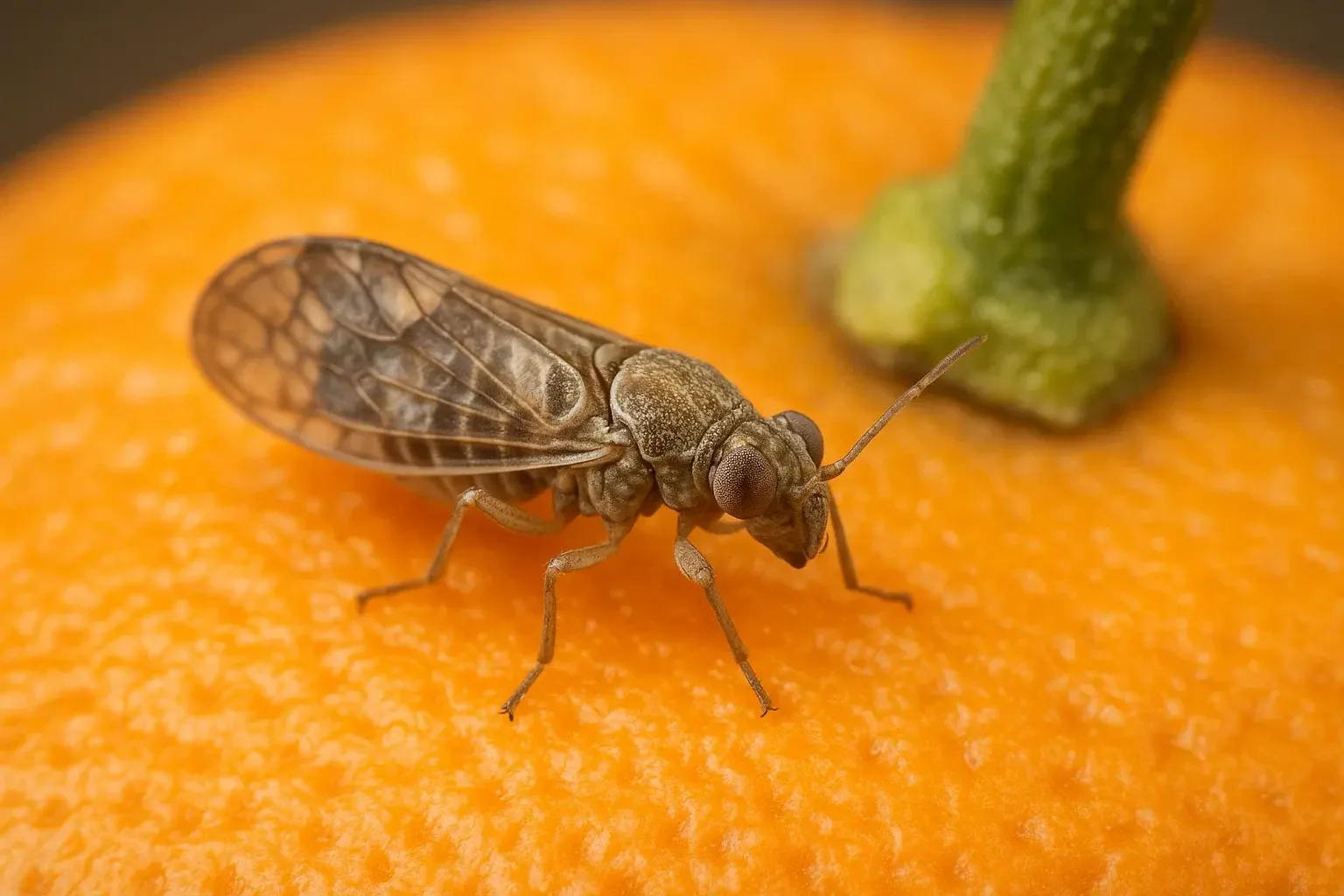
A psyllid insect that is harming orange production
Key Takeaways
80–90% of global orange juice comes from Brazil & Florida.
Both regions face drought, hurricanes, and citrus greening.
Supply chain concentration is causing global shortages & price spikes.
Climate change and disease are reshaping the citrus industry.
Introduction: The Hidden Fragility Behind Your 100% Orange Juice
For decades, your “100% orange juice” quietly flowed through a highly concentrated orange juice supply chain, dominated by Brazil and Florida. Now droughts, storms, and disease are hitting both at once - and the global breakfast system is starting to crack.
The orange juice aisle in a Berlin supermarket isn’t supposed to feel like a luxury boutique. But on a gray Tuesday morning, a shopper stops short in front of the refrigerated shelf. Their usual brand is gone. The “100% orange juice” carton that is left looks suspiciously smaller, and the price tag blinks back: €4.99 - about 40 percent more than last year. It’s not just sticker shock; it’s a tiny window into a fragile orange juice supply chain most people never see.
When did orange juice become a luxury item? they think, turning the carton over as if the answer might be hiding in the ingredients list. There’s no big red warning label, no dramatic explanation - just the same sunny branding and a slightly more cramped nutrition table. The only obvious difference is the number on the shelf.
Behind that €4.99 price tag sits a global system balanced on a worrying bottleneck: around 80–90% of the world’s orange juice comes from just two regions: Brazil and Florida. Because the citrus supply chain is so geographically concentrated, any disruption in Brazil or Florida quickly spreads across the entire global market. When harvests in both places are hammered by droughts, storms, and disease at the same time, it doesn’t just rattle farmers and traders. It ripples all the way down the orange juice supply chain to the most routine part of your morning: the glass on your breakfast table.
So what happens when both of those places get hit at the same time and the world’s breakfast staple suddenly has nowhere else to go?
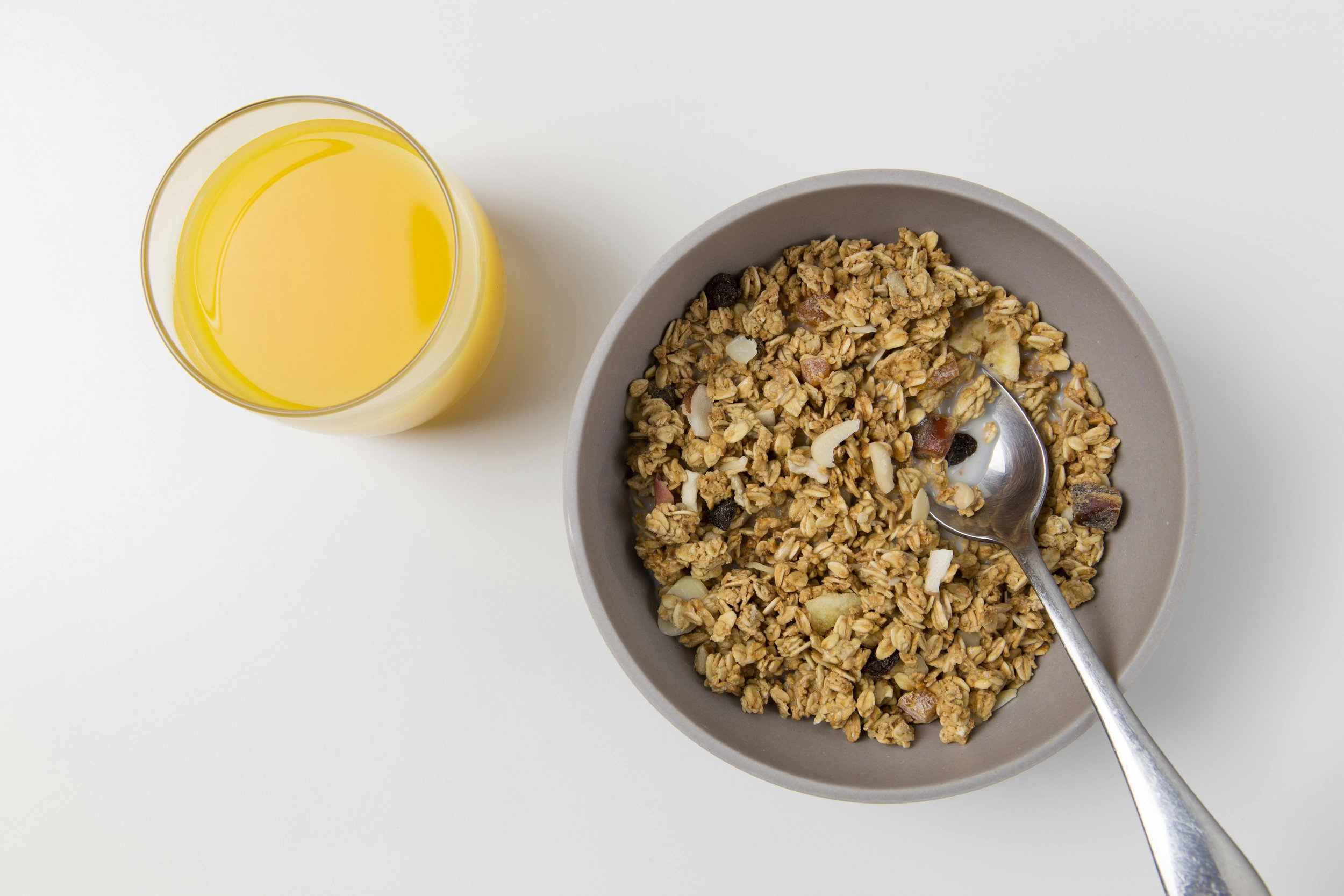
Top-down view of a bowl of granola, placed next to a glass of orange juice.
Why the Orange Juice Supply Chain Matters
What This Story Will Reveal
This story is about how we ended up here: how a global breakfast habit became dependent on two regions, how climate change and citrus disease are colliding in the same groves, and why the wording on the carton changes to keep juice flowing. But it’s also about something bigger. Orange juice is a case study in how our food systems trade resilience for efficiency and what it means when those highly optimized systems start to buckle before we’ve even poured the first glass of the day. However, orange juice is only one example in a growing pattern of global commodity shortages driven by climate volatility and supply chain concentration.
The Two-Country Breakfast: How the Orange Juice Supply Chain Became So Concentrated
Before it became a permanent fixture of hotel buffets and weekday breakfasts, orange juice was a regional, seasonal luxury. The modern orange juice supply chain was really born in the mid-20th century, when frozen concentrated orange juice turned a perishable fruit into a global commodity. Post-war logistics, cold-storage infrastructure, and aggressive advertising campaigns didn’t just sell juice - they sold the idea that a “proper” breakfast included a glass of it, every single day, everywhere.
As demand grew, the system quietly narrowed. Florida already had the groves and the know-how, but Brazil had something even more seductive to the industry: vast tracts of accesible land, a suitable climate, and room to scale. Over decades, investment, trade agreements, and port infrastructure turned Brazil into a juice powerhouse, while Florida became the other pillar of global supply. Today, those two regions dominate the global orange juice supply, together providing around 80–90% of the world’s orange juice.
On paper, there are other players - Mexico, parts of the EU, a scattering of smaller producers - but they’re bit parts in a two-country show. In a simple pie chart of global production, Brazil and Florida are the huge slices; everyone else is the thin sliver you almost miss. It’s an efficient system, optimized for volume and cost. It’s also a fragile one, where a bad year in just two places can send shockwaves through the entire orange juice supply chain, from the groves to the supermarket shelf. What’s happening in orange juice is a clear illustration of broader food system fragility, where efficiency has outpaced resilience.
The Perfect Storm: Drought, Hurricanes, and Disease
How Orange Juice Shortage Started
For decades, the system could handle a bad year in one region. If Florida took a beating from hurricanes, Brazil picked up the slack. If Brazil struggled with a dry season, Florida’s groves kept the cartons flowing. Now, the shocks are starting to stack.
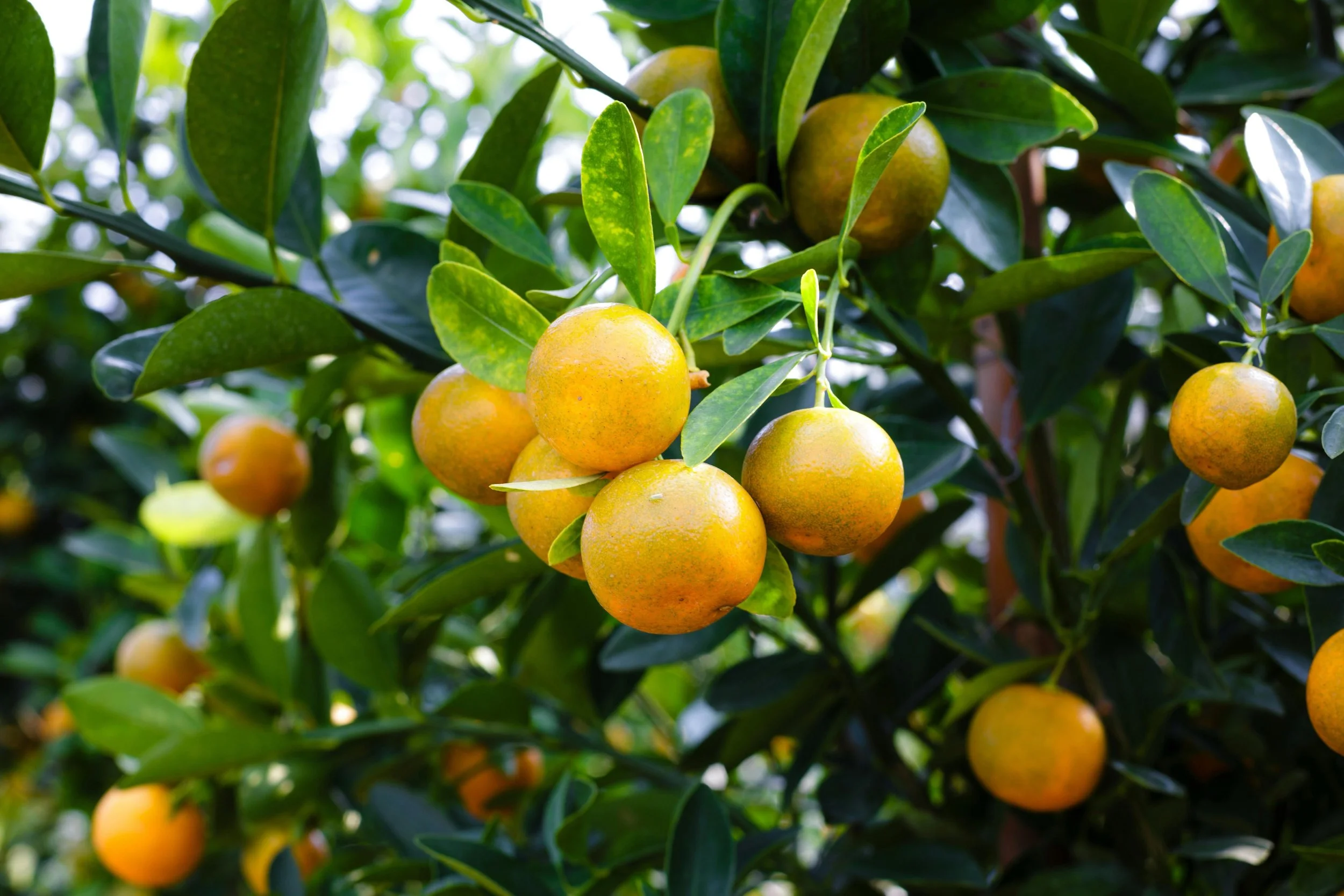
Cluster of ripe oranges hanging from a tree branch, surrounded by glossy green leaves in natural daylight.
Inside Florida’s Citrus Collapse: Hurricanes, Heat, and Vanishing Harvests
Florida is being pounded by more frequent, more intense storms and something slower and deadlier: citrus greening disease. A tiny psyllid insect spreads a bacteria that starves trees from the inside, leaving bitter, misshapen fruit and slashing yields. Whole orchards are becoming economically impossible to maintain and citrus greening is part of a wider surge in crop disease outbreaks affecting fruits worldwide, often intensified by changing climate conditions.
How Brazil’s Orange Production Crisis Is Reshaping the Global Juice Market
Brazil, the other pillar of the orange juice supply chain, is dealing with the opposite kind of disaster: relentless droughts, heat waves, and shifting rainfall patterns, all layered on top of creeping disease and rising costs for fertilizer, fuel, and labor. What used to be isolated regional problems are now overlapping, driven by a changing climate that doesn’t respect harvest schedules or trade flows.
On a chart, you’d see two lines -Brazilian harvest volumes and Florida harvest volumes- both zigzagging downward over the last decade, with simple annotations marking the big hits: “major hurricane season,” “severe drought,” “disease outbreak.” What looks like a set of squiggles is, in practice, the moment when a concentrated system starts to run out of backup plans.
A tablet placed on a pile of fresh oranges with green leaves, creating a contrast between technology and fruit.
From Orchard to Algorithm
Why Traders Panic Before You Do
When a harvest in Brazil or Florida goes bad, the first place it shows is not the supermarket shelf - it’s a screen on a trading desk. Long before shoppers see a higher price, the orange juice supply chain turns into a string of numbers: weather alerts, yield estimates, shipping delays, futures prices blinking red.
Orange juice futures are a niche corner of the commodity markets, but when trouble hits the groves, they suddenly become the main character. A few percentage points off the expected harvest, and traders start bidding up contracts that promise delivery months ahead. It’s basically a financial weather forecast: buy now, because the juice will be scarcer and pricier later.
Picture an analyst in London or New York with three tabs open: satellite images of Brazilian groves, hurricane models aimed at Florida, and a live price chart. They watch cold fronts and storm tracks the way a storm-chasing meteorologist watches radar, except their thunderstorm is a vertical spike on an orange juice futures graph.
The path from that spike to your breakfast is simple, if delayed. Futures go up, bottlers and brands lock in more expensive contracts, and eventually those costs work their way into the carton. By the time you’re staring at the new €4.99 price tag, the panic has already happened - quietly, in the background, in an algorithmic layer that now sits between the orchard and your glass.
Plan B: Can We De-Risk Breakfast?
New Regions, New Tech, Same Old Problems
Once you realize how concentrated the orange juice supply chain is, the obvious question is: why not just grow oranges somewhere else? And to an extent, that’s happening. Mediterranean producers, parts of Mexico, and pockets of North Africa are nudging their way into the market. Some experiment with alternative citrus - tangerines, mandarins, hybrids that can mimic classic orange flavor in a blend. It helps at the margins, but it doesn’t yet replace two giants.
The more exciting action happens in the lab and the orchard. Growers are testing disease-resistant rootstocks that can survive citrus greening, fine-tuning irrigation systems that drip exactly the right amount of water, and using precision agriculture to monitor tree health via drones and sensors. Food scientists are playing with flavor engineering and lab-designed juice blends that can keep your glass tasting “orange” even when the underlying fruit mix quietly changes.
The problem is time. An orange tree takes years to mature, while climate change and new disease patterns move on much shorter cycles. You can’t reboot an orchard the way you reboot a server farm. So yes, we can diversify sources and upgrade the tech, and we probably will. But the uncomfortable conclusion is that your breakfast juice will be riding on a system that stays fragile - just slightly less obviously so - long after the current price spikes fade from memory.
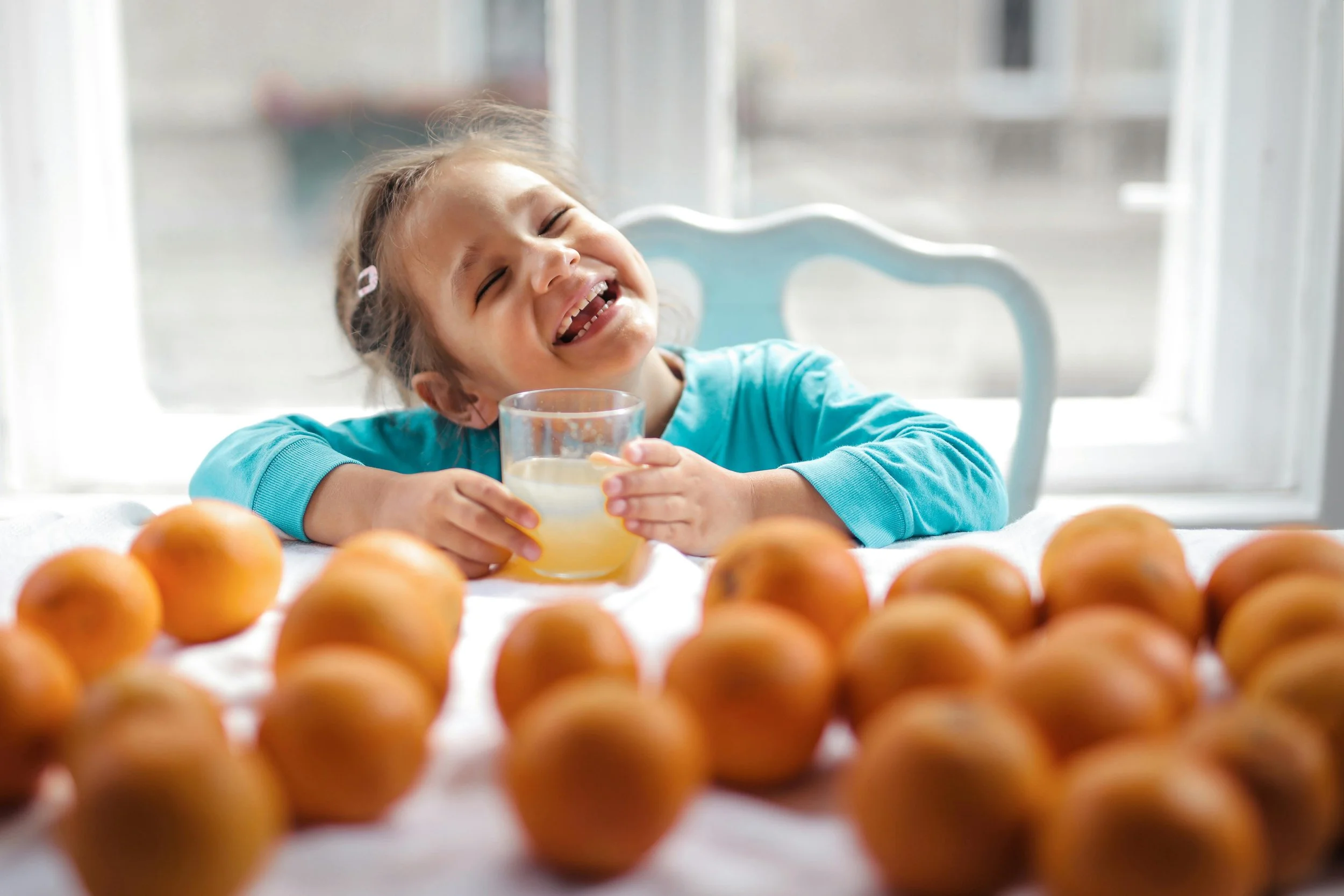
A smiling young child, holding a glass of orange juice, with several oranges spread out in the foreground.
A Carton-Sized Lesson About Global Risk
What Orange Juice Teaches Us
Orange juice is just one aisle in the supermarket, but the story behind it is a template. The same pattern shows up in coffee plantations in a handful of countries, in cocoa farms squeezed into ever-smaller strips of West Africa, in palm oil, soy, and wheat grown in tight geographic clusters. The orange juice supply chain isn’t uniquely fragile - it’s just a particularly visible case study in how we’ve built our food system: hyper-efficient, tightly optimized, and one serious shock away from wobbling.
On a spreadsheet, concentration looks brilliant. Fewer regions, bigger volumes, lower costs, predictable logistics. But that elegance turns brittle when multiple crises hit at once - drought plus disease, storms plus geopolitical tension. Suddenly, the same structure that made everything cheap and abundant makes it hard to adapt, fast. That moment when you’re standing in front of a €5 carton, wondering what happened to your “simple” breakfast, is the system revealing its hidden complexity.
A growing wave of companies is trying to change that logic from the inside. Finches, for example, is betting that smarter data, better forecasting, and more transparent sourcing can make supply chains like orange juice less of a black box. The idea is simple, if not easy: help brands diversify origins, spot risks earlier, and design products that aren’t hostage to a single harvest in a single region. It won’t magically fix climate change or rebuild orchards overnight - but it can give a fragile system a little more room to bend instead of break.
The next time you tilt a carton over your morning glass and hesitate at the €5 price tag, remember: it’s not just oranges in there. It’s weather models, trade routes, financial bets, panicked harvest reports and a whole fragile system trying very hard not to come apart before breakfast.
When One Crop Fails, the Whole System Wobbles
Orange juice is not an isolated case. Similar vulnerabilities exist in:
Coffee (Brazil, Vietnam)
Cocoa (Ghana, Côte d'Ivoire)
Palm oil (Indonesia, Malaysia)
Wheat & soy (U.S., Russia, Brazil)
Tea (Madagascar, Sahel)
Our food systems are highly optimized, hyper-efficient, and geographically concentrated.
This keeps prices low - until the system breaks.
FAQ: Orange Juice Prices, Shortages and the Global Supply Chain
Why is orange juice so expensive in 2025?
Orange juice is so expensive in 2025 because the global orange juice supply chain is under pressure from multiple shocks at the same time. Brazil and Florida, which provide the majority of the world’s orange juice, have both faced poor harvests due to droughts, extreme weather, and citrus disease. With less fruit available, processing costs and futures prices increase, and those higher costs are passed on to consumers at the supermarket shelf.
What is causing the global orange juice shortage?
The global orange juice shortage is mainly caused by falling harvests in Brazil and Florida, the two dominant producers in the orange juice market. Their groves are being hit by a combination of climate-related events—such as droughts, heat waves, and hurricanes—and long-running problems like citrus greening disease. Because the supply chain is so concentrated in these two regions, there are not enough alternative sources to fully make up the shortfall.
How does citrus greening disease impact supply?
Citrus greening disease (also known as HLB) weakens orange trees from the inside, leading to smaller, misshapen, and often bitter fruit. Over time, infected trees produce far fewer marketable oranges, and entire orchards can become unprofitable to maintain. As more groves are affected, total orange production drops, which directly reduces the amount of fruit available for juice and tightens global supply.
Why are Brazil and Florida critical to the orange juice market?
Brazil and Florida are critical to the orange juice market because together they account for the overwhelming majority of global orange juice production. Both regions have the climate, infrastructure, and long-built processing capacity needed to grow, process, and export juice at huge scale. This dominance made orange juice cheap and plentiful for decades, but it also means that when Brazil and Florida struggle, the entire world market feels the impact.
Will orange juice prices continue to rise?
Orange juice prices are likely to remain elevated -and may rise further- if harvests in Brazil and Florida continue to be hit by extreme weather, drought, and disease. Even if conditions improve, it takes years to restore or replant orchards, so supply cannot rebound overnight. In the long term, prices will depend on how quickly producers can adapt to climate change, control citrus greening, and diversify orange juice production beyond just a few key regions.
Sources
Florida Citrus - Florida and Brazil Orange Juice Production
The Guardian - Florida and oranges have been a pair for decades. Now the industry has sour prospects
