
I Talked to 40 Food Companies in 1 Day. They're All Flying Blind.
What I learned walking the floor of Latin America’s biggest food trade fair about the broken information layer in agricultural supply chains.
By Catharina van Delden, Co-Founder & CEO, Finches
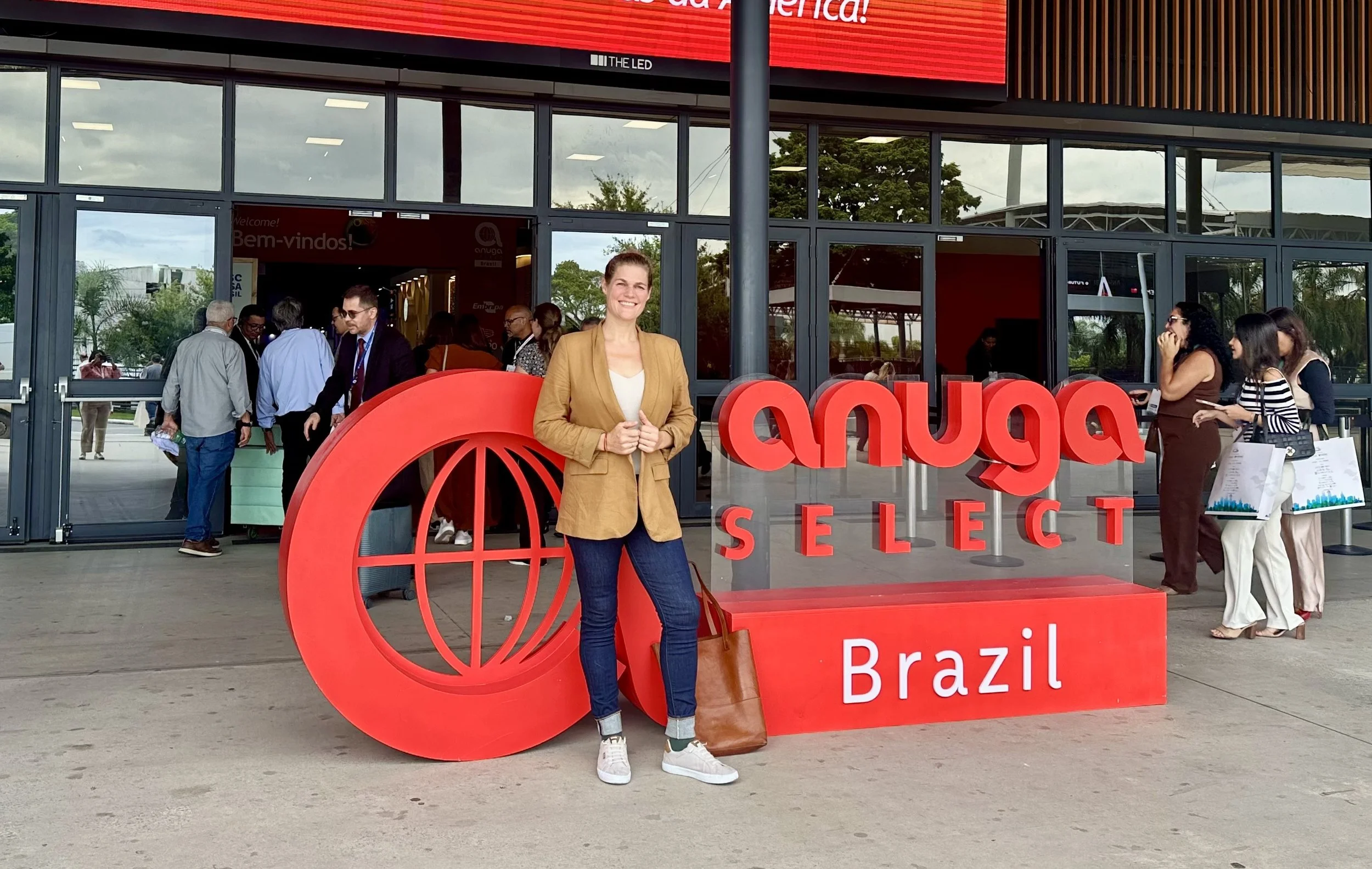
This week I was at Anuga Select Brazil in São Paulo — the largest food and beverage trade fair in the Americas. One day, roughly 40 conversations: açaí producers in the Amazon, pistachio growers from California, seaweed manufacturers in Thailand, candy makers in Fujian, spice traders who source from six continents.
I wasn't (only) there to sell. I was there to listen. Specifically, I wanted to understand one thing: how do the people who actually feed the world manage their raw material sourcing when the world keeps getting harder to source from?
The short answer: they don't. Not really. Not in any way that would pass as "managed" in any other industry.
Everyone has a Hormuz story. Nobody wants to tell it.
What surprised me most was how many companies I spoke to had already felt the impact of the Strait of Hormuz crisis. Not in some distant, abstract way, but in real, tangible costs.
For example, a distributor in São Paulo: $400 extra per container on strawberry imports from Egypt. One of the largest pistachio producers in the US (7,000 acres in California) had to reroute entire shipments. A Brazilian company that sources 100% of its potatoes from Egypt, now sitting on a single-origin dependency in one of the most geopolitically volatile corridors on the planet.
What stayed with me was not the list of sourcing problems people gave, but the problems they left out. Asked directly about raw material pressure, very few started with Hormuz, climate volatility, or pest outbreaks, despite the fact that those forces are already reshaping supply chains across categories.
But that omission made sense in context. At a trade fair, companies are not speaking from inside the mess of day-to-day operations. They are speaking from the stand. The booth is polished, the samples are out, the conversation is commercial, and the whole environment rewards composure. You are there to sell the business, not to dwell on how exposed it has become.
The hack that opened every conversation
It did not take long to realize that asking directly about sourcing risk was the wrong way in. The question sounded too abstract, too exposed, and it tended to produce the kind of answer people give when they are trying to sound in control.
The more revealing question was about quality: how are you maintaining your high quality standards as volatility increases?
That was where the real conversation started. Food manufacturers are far more willing to speak openly about quality because quality is not just an operational metric. It is part of how they understand the business. And once they began talking about how difficult it has become to preserve consistency, the rest followed without much prompting: disrupted harvests, weaker supplier reliability, patchy data, raw materials arriving with more variation than before.
In that sense, the issue was never just risk. It was the growing strain of protecting product integrity in a system that has become harder to rely on. That framing says something important about agricultural sourcing teams. They do not think of themselves primarily as risk managers. They think of themselves as the people still trying to make the product work.
The real problem isn't Hormuz. It's the information layer.
Strip away the geopolitics and the climate headlines, and the same problem kept surfacing at Anuga, regardless of geography, commodity, or company size: the people making sourcing decisions are often operating at a distance from the best information their own organizations already have. There is remarkably little infrastructure connecting what is seen in the field to what is acted on at headquarters.
Think about this for a second. Every year, thousands of corporate agronomists, procurement managers, and quality teams physically visit farms. They're out there in the dirt, spotting early signs of pest pressure, noting weather damage, assessing crop health. This is some of the most valuable supply chain intelligence in existence. It is not secondary intelligence or market interpretation. It is direct observation, gathered by the people closest to the raw material itself. In theory, it should shape procurement decisions long before a problem reaches production.
In practice, much of it disappears into the margins of the business. A photo sits in a camera roll. An update gets dropped into WhatsApp. Notes remain on paper or in personal files. Observations that took time, travel, and expertise to collect never become usable across the wider organization. One agronomist told me she spends roughly 15 hours a week documenting what she has already seen in the field, not because the work is analytically demanding, but because the process of turning observation into something shareable is still largely manual. Even then, what reaches the rest of the business is often partial, delayed, or too poorly structured to be useful.
Meanwhile, teams at headquarters fall back on the signals that are easiest to access: satellite imagery, commodity indices, external reports, broad market indicators. Useful, certainly, but often disconnected from what their own people observed at farm level the previous week. So the organization develops a familiar blind spot. It becomes more fluent in abstract indicators than in its own ground truth.
When the consequences finally appear in the boardroom, they rarely arrive labeled as an information failure. They show up as shortfalls, emergency purchases, missed expectations, and unnecessary pressure on the P&L. Problems that feel sudden often are not sudden at all. They were simply visible too early, in the wrong place, to travel.
By 2026, this should not still be the norm. In most industries, the people closest to the source are understood to be the earliest and most reliable signal of change, provided the organization gives that information somewhere to go.
The açaí rabbit hole
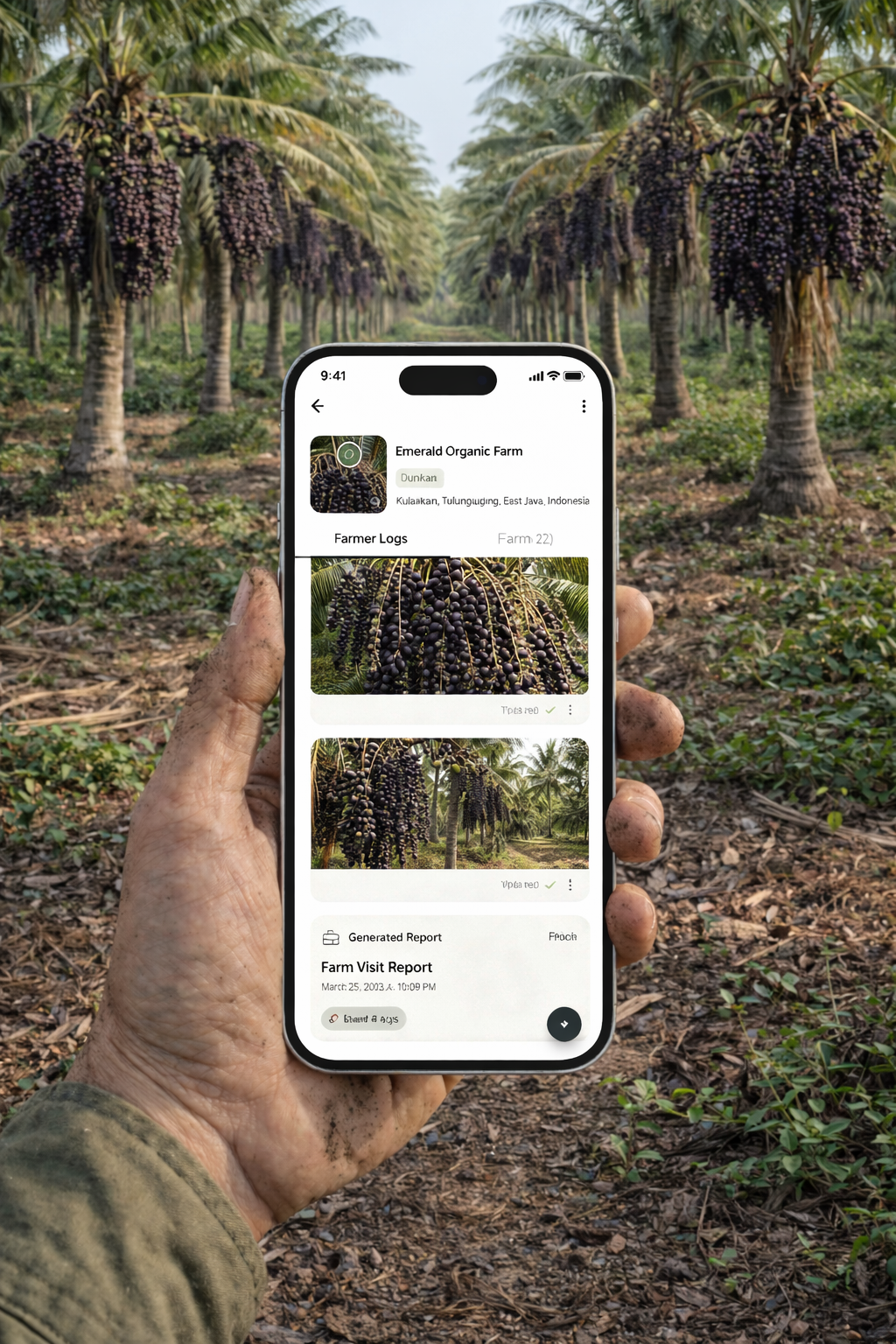
The most vivid example I stumbled into at Anuga: Açaí berry. The berry is grown largely by small family producers deep in the Brazilian Amazon, while the companies processing, branding, and distributing it (some of them substantial businesses with national reach) depend on that dispersed network for both volume and consistency.
When I asked one company how they monitor quality and supply across hundreds of small farms, the answer was refreshingly direct: "It's very hard to control. We go out and visit, but we need signals from other sources."
They understood the weakness perfectly well. The field visits were happening, the observations were being made, and the effort was clearly there. But the knowledge rarely traveled far. It stayed scattered, poorly structured, and separated from the broader context around weather, pests, and regulation that might have turned it into an early warning rather than a retrospective explanation.
The data exists. The human sensors exist. The system to connect them doesn't.
Why this is about to get much worse
What makes 2026 different isn't that disruptions are happening. It's that they're compounding, and the lag between cause and consequence is getting longer and harder to trace.
Take Hormuz again. It's not just an oil story. Nearly half of global urea exports pass through that strait. When fertilizer gets expensive, farmers adjust: they apply less, they switch crops, they change practices. The effects take time to surface, which is precisely why they are so often missed. Yields shift, supply tightens or changes shape, and commodity prices begin to move months later. By the time those movements are visible enough on a procurement dashboard to feel actionable, the earlier and more useful window for response has usually already closed.
Add climate volatility to the picture and the pattern becomes even harder to ignore, because the pressure is no longer confined to one type of disruption or one region at a time. Frost warnings in citrus zones, drought across major grain belts, pest outbreaks moving into latitudes where they were previously rare or unknown are not random background noise. They are signals, and in many cases they are visible early enough to matter. The real issue is not whether those signals exist, but whether a company has built the means to capture them, interpret them in context, and connect them to commercial decisions before the consequences arrive in production, pricing, or supply.
The companies I met at Anuga that seem best positioned aren't the ones with the fanciest dashboards or the biggest data teams. They're the ones that treat their field people as intelligence assets, not clipboard carriers. Every farm visit produces signal. The question is whether that signal reaches anyone who can do something with it.
What we're building at Finches
This is the problem that made us start Finches.
We built a mobile-first platform that captures what field teams are already doing, from voice notes and photos to videos and text observations, and structures it into enterprise-grade visit reports. That means no more losing two workdays a week to manual documentation, and no more valuable field knowledge disappearing into WhatsApp threads or other dead ends.
But structured field data is only one part of the picture. We also bring in the external signals that shape sourcing long before they show up in procurement systems, from weather events and pest outbreaks to news and regulatory changes, matched to the regions and crops your business actually depends on. The result is a single searchable platform where field observations and external risk signals sit side by side, making it easier to spot issues earlier and act with more context.
When a frost warning hits a region where three of your citrus suppliers are based, Finches flags the affected farms and alerts your team before the first field update has worked its way through the organization.
When an agronomist records observations at a potato farm, that context becomes part of a searchable intelligence layer that the wider business can actually use. Instead of relying on scattered notes and individual memory, teams can ask concrete questions. "Which suppliers showed early pest pressure this quarter?" is now a question you can actually ask and get an answer to.
We're not replacing the human sensor. We're amplifying it. Turning the most underutilized data source in agricultural supply chains, the people who visit the farms, into a real-time intelligence network.
The bottom line from São Paulo
Forty conversations over three days confirmed something I have felt since we started building Finches: the agricultural sourcing world is sitting on a vast reserve of field intelligence and still treating too much of it as disposable.
The information is there already. It is produced every day by the people closest to the raw material, the ones visiting farms, noticing change, and understanding conditions before they surface anywhere else in the business. What remains missing is a system that can capture that knowledge, structure it, and move it fast enough to matter.
The disruptions aren't going to slow down. Hormuz, climate volatility, pest migration, trade wars: this is the new normal for agricultural supply chains. The companies that will navigate it are the ones building the infrastructure to see it coming.
Everyone else will keep flying blind. And they'll keep being surprised when it costs them.
